






























by Sheu G. Odu-Onikosi, Taofik A. Momoh, Felicia Joshua, Zeenat A. Issa and Folasade Amulejoye; Fish Health and Nutrition Research Group, University of Plymouth
With a population of over 200 million, 60 percent of which are under the age of 25, Nigeria is one of the fastest-growing nations in the world. This rapid population growth drives an increasing demand for affordable protein sources, positioning Nigeria as a key player in Africa’s aquaculture industry.
Fish, a vital component of the Nigerian diet, represents a significant part of the nation’s food security. In 2021, the country’s fish demand was 3.6 million metric tonnes, with only about 38.1 percent of this demand met through domestic fisheries (12.6% from inland fisheries, 13.7% from marine fisheries) and aquaculture (11.8%) (Odioko and Becer, 2022). The remaining deficit of 62 percent, valued at $1.02 billion, was partly addressed by importing frozen fish from countries like Norway, Chile, and Morocco.
Nigeria’s aquaculture is characterised by a reality that is as daunting and exciting as its geography. It’s approximately 900 million sq. km of land area is characterised by a vast range of landscapes including a coastal plain stretching across 853 km of Atlantic coastline in the south. Inland, its two major rivers, the River Niger and River Benue, create a y-shaped belt of laterite and alluvial soil spanning across the North-central and down to the Niger Delta where it empties into the ocean. This abundance of water resources makes the country well-suited for inland, coastal, as well as offshore aquaculture.
As the demand for protein continues to rise, aquaculture has emerged as a crucial sector for supplementing dwindling wild fish stocks and boosting local fish production. The sector’s growth rate of 11.7 percent far outpaces that of other agricultural subsectors, which typically grow between 1-4 percent annually. This rapid expansion underscores the role of aquaculture in diversifying the economy and contributing to Nigeria’s GDP. The government’s efforts, through policies such as the Agricultural Promotion Policy (APP, 2016) and national initiatives, aim to reduce fish imports, improve local productivity, and focus on the farming of key species like catfish and tilapia.
Key aquaculture species and production trends
In total, Nigeria’s aquaculture sector produced 259,106 metric tonnes of fish in 2022, making it one of Africa’s largest producers. Aquaculture production in Nigeria is dominated by tilapia and catfish. The main tilapia species farmed include Nile tilapia (Oreochromis niloticus) and Blackchin tilapia (Sarotherodon melanotheron) (Oboh, 2022), while the African catfish (Clarias gariepinus) is the most widely cultured species, accounting for 54 percent of total aquaculture production in 2022 (FAO, 2024).
Indeed, Nigeria is the highest contributor to the global aquaculture production of African catfish. The sharp-tooth catfish, Heterobranchus longifilis, H. bidorsalis, Heteroclarias (a hybrid of C. gariepinus and H. longifilis), and Chrysichthys spp. are also catfish species farmed in Nigeria. In addition to tilapia and catfish, common carp (Cyprinus carpio), African knifefish (Gymnarchus niloticus), Nile perch (Lates niloticus), and African bony tongue (Heterotis niloticus) are also farmed in Nigeria (Ogunji and Wuertz, 2023).
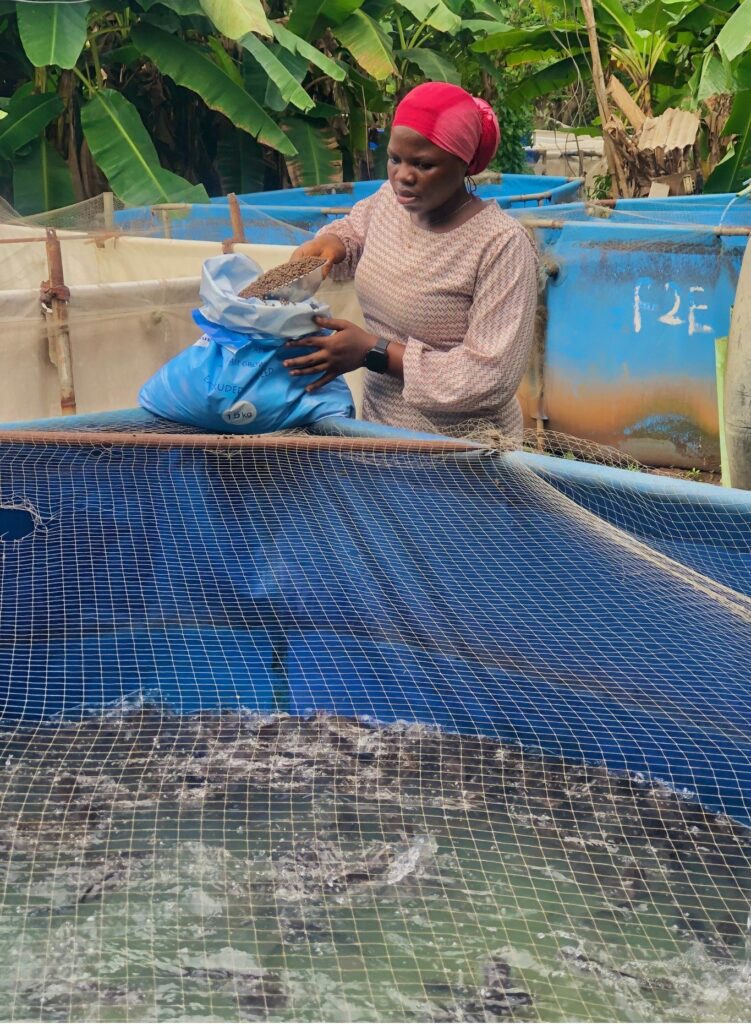
The key aquaculture farming regions in Nigeria include Lagos, Ogun, Delta, and Rivers states, benefiting from their access to rivers, lakes, and reservoirs. The most prevalent culture systems used in Nigeria are earthen ponds, concrete ponds, plastic tanks, and tarpaulin ponds (Kaleem and Bio Singou Sabi, 2021). While traditional pond culture is still prevalent, there is a gradual increase in interest and use of tank systems and recirculating aquaculture systems (RAS), particularly among commercial farms. Despite this, small-scale farms continue to dominate the sector, representing around 70 percent of all fish farming activities.
Economic and social impact of aquaculture
Aquaculture plays a critical role in Nigeria’s economy, contributing 3-4 percent to the country’s annual GDP. In the second quarter of 2024, aquaculture combined with agriculture contributed 22.61 percent to Nigeria’s GDP (NBS, 2024). The sector is a major source of income and employment, particularly in rural areas. It supports various value chains, from feed manufacturing to processing and distribution.
In terms of food security, aquaculture is vital for meeting Nigeria’s protein needs. Fish contributes more than 40 percent of the animal protein intake in Nigeria, with consumption levels averaging 13.3kg per person annually. As wild fish stocks decline due to overfishing and environmental changes, aquaculture has become increasingly important for ensuring an affordable and sustainable protein supply. Small-scale aquaculture is particularly important for rural food self-sufficiency, as it enables households to produce nutritious fish for consumption and income generation through surplus sales.
The role of government, international organisations, and the private sector
Nigeria’s aquaculture policies and framework have been primarily driven by the need for food security and economic growth. Collaboration between government agencies, international organisations, and research institutions has played an essential role in shaping the sector and promoting sustainable aquaculture practices. The FAO, for instance, has provided technical assistance, technology transfer, and promotion of sustainable practices through partnerships with local universities and research institutions.
The private sector is also integral to the sustainability and growth of Nigeria’s aquaculture industry. International and local feed manufacturers, hatchery operators, technology providers, farms, financial institutions, and consulting firms play a vital role in enhancing productivity, improving fish production, and addressing food security challenges. The continued collaboration between private sector entities and other stakeholders will be essential for the long-term viability of aquaculture in Nigeria.
Challenges facing Nigeria’s aquaculture sector
Despite it’s potential, the aquaculture sector faces several challenges. The availability and affordability of high-quality feed are major issues, with many fish farmers relying on imported fish meal or imported feeds. The high cost of imports, combined with the devaluation of the Nigerian currency, has forced many farmers to resort to producing local, low-quality feed. This has resulted in poor fish growth, high mortality rates, and in some cases, farm closures.
Additionally, the sector suffers from a shortage of high-quality fish seeds and a lack of technical expertise among farmers (Kaleem and Bio Singou Sabi, 2021). Disease outbreaks, particularly in hatcheries, are a significant challenge, exacerbated by poor disease prevention practices and the impact of climate change on water temperatures (Ogunji and Wuertz, 2023). Other obstacles include poor management skills, inadequate infrastructure, erratic power supply, limited market access, inconsistent government policies, and insufficient funding, particularly for small-scale farmers.
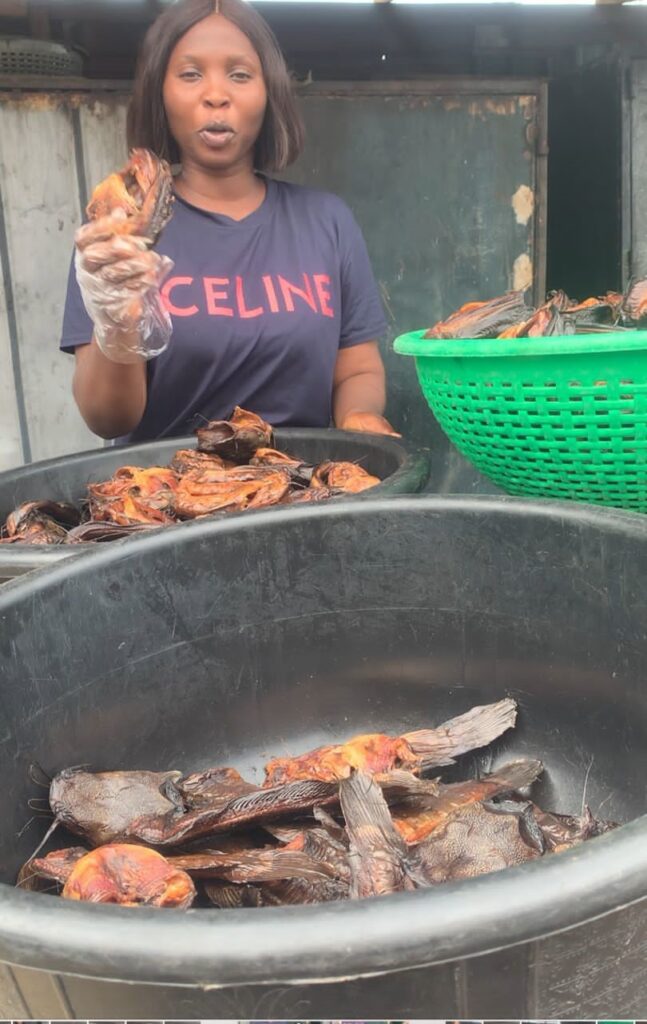
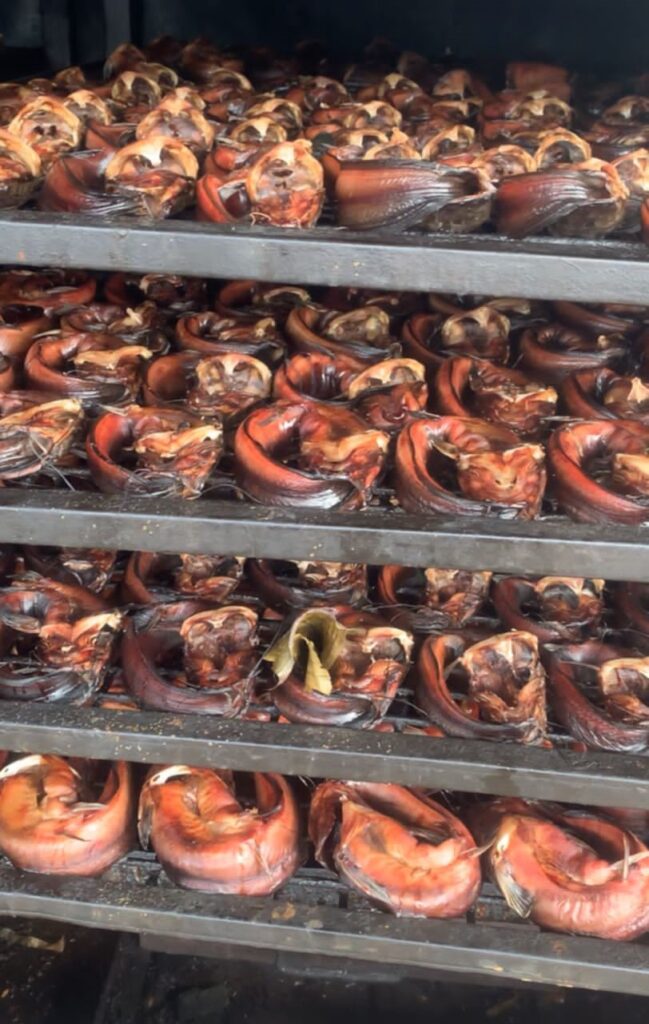
A small-scale aquaculture entrepreneur, Odunayo Ogunyomi, with smoked African catfish ready for distribution and sale, highlighting the value-added activities that contribute to employment and market distribution in the aquaculture value chain. (©Odunayo Ogunyomi)
Sustainability and environmental concerns
In Nigeria, as in other countries, aquaculture can pose environmental risks if not managed responsibly. The key concern is the water and environmental pollution arising from discharged fish farm wastewater (Ojewole et al., 2024). The majority of fish farmers in Nigeria operate a pond/tank system where wastewater is drained into the environment several times a week. This can lead to eutrophication and contamination of fresh/inland water bodies.
There is also a concern of the uncontrolled use of antibiotics in Nigeria’s aquaculture sector, particularly among small-scale farmers. This practice can contribute to the development of antibiotic-resistant bacteria, posing both environmental and public health risks. For example, Okocha et al. (2021) reported antimicrobial drug residues in farmed catfish from major farming regions in Nigeria. However, there are ongoing efforts to address these concerns and promote sustainable aquaculture practices. Initiatives such as the introduction of Best Management Practices (BMPs), such as guidelines from IFAD for small-scale farmers in Nigeria, encourages responsible water use and improved waste management (IFAD, 2023). Additionally, the adoption of Integrated Multi-Trophic Aquaculture (IMTA) by farmers in Nigeria has shown potential for reducing waste and improving overall resource efficiency (Bossuet, 2024).
Opportunities and innovation in the sector
Nigeria’s aquaculture sector holds immense potential for growth, driven by advancements in technologies, genetics, and breeding programs. One notable development is the breeding of fast-growing Genetically Improved Farmed Tilapia (GIFT) by CGIAR researchers at WorldFish in 2023, which has enabled farmers to improve yields and meet rising demand.
The adoption of innovative tools and systems, such as Lean Production Systems and digital farming technologies, is transforming fish farming practices. Some Nigerian aquaculture workers have been trained by the US Feed the Future Initiative in applying Lean Management in their business with success stories reported. Mobile apps and data-driven farming solutions allow farmers to monitor water quality, optimise feeding schedules, and track fish health. Such technologies reduce waste, increase efficiency, and ultimately contribute to sector expansion.
In 2022, an innovative aquaculture initiative funded by the Danish government was introduced for fish farmers in Nigeria to provide an online education, trading, and farm management platform (SOLIDARIDAD, 2022). This platform can provide access to education, best practices, and a transparent market. It can also provide tailor-made farm management software for decision making and operations monitoring.
The export potential for Nigerian aquaculture is significant, especially with growing international demand for high-quality fish products. By diversifying into new species and improving production standards, Nigeria can position itself as a competitive player in global markets (Ogunji and Wuertz, 2023). To realise these opportunities, aquaculture investments are crucial. Public-private partnerships, microfinance initiatives, and cooperative financing models can drive modernisation efforts and help farmers scale their operations. With strategic investments and supportive policies, Nigeria’s aquaculture industry can evolve into a major contributor to food security, job creation, and economic growth.
Future outlook for the aquaculture industry in Nigeria
Nigeria’s aquaculture sector has the potential to expand further, driven by species such as African catfish, which is in high demand due to its fast growth and feed efficiency. However, while Nigeria remains Africa’s second-largest fish producer, producing about one million tonnes annually (including 259,106 tonnes from aquaculture), it still falls short of meeting the 3.3 million tonnes of domestic demand (FAO, 2024).
Expanding production requires addressing challenges such as limited resources, poor management, and inadequate government support. Technological advancements in hatchery techniques, feed formulation, and water quality management are already improving productivity, while the adoption of integrated farming systems also offers potential for higher yields. Continued investment in modern farming infrastructure and cooperative financing models will empower smallholder farmers, making aquaculture a promising sector for job creation and economic development.
Unlocking Nigeria’s aquaculture potential
Aquaculture in Nigeria has experienced rapid growth over the past decade. Although significant challenges remain, particularly for small-scale farmers, support from government stakeholders, ongoing innovation, and increased investment can help overcome these obstacles. Sustainable practices, technological adoption, and value chain development will be crucial in unlocking the full potential of Nigeria’s aquaculture industry and ensuring its long-term success.
Published in the November 2024 issue of International Aquafeed