





























by Priyal Shah, International Aquafeed and Fish Farming Technology
For centuries, Iceland’s identity has been shaped by the sea. Fisheries remain one of the country’s most important industries, supporting coastal communities, driving exports and contributing significantly to food production. Alongside this long-established sector, aquaculture has emerged as one of Iceland’s fastest-growing industries, transforming from a niche activity into an increasingly important pillar of the country’s seafood economy.
While marine fisheries continue to dominate overall production, aquaculture has expanded rapidly over the past decade, driven by favourable natural conditions, investment and growing global demand for farmed seafood.
“Access to exceptional natural resources, including clean seawater and renewable energy, has been a key advantage,” says Lárus Ásgeirsson, Executive Chairman at Laxey. “Iceland also offers an excellent location for supplying both European and North American markets by sea. In addition, the industry has attracted experienced professionals, long-term investors and strong financial institutions, creating the foundation for rapid and sustainable growth.”
Fisheries remain the backbone
According to the Food and Agriculture Organization (FAO), Iceland’s fisheries sector comprises marine fisheries, aquaculture and recreational fisheries. Marine fisheries remain by far the largest contributor, accounting for around 97 percent of the country’s combined capture fisheries and aquaculture production, which reached approximately 1.43 million tonnes in 2022.
More than 40 fish and shellfish species are harvested commercially around Iceland. Cod, haddock, blue whiting, saithe, redfish, halibut and plaice dominate the demersal fisheries, while pelagic catches are centred on capelin, herring and mackerel.
The productivity of Iceland’s fishing grounds is closely linked to its unique marine environment. Warm waters flowing from branches of the North Atlantic Gyre meet colder currents from Greenland along the country’s coastline, creating nutrient-rich conditions that support important spawning grounds and sustain commercially valuable fish stocks.
Aquaculture gathers momentum
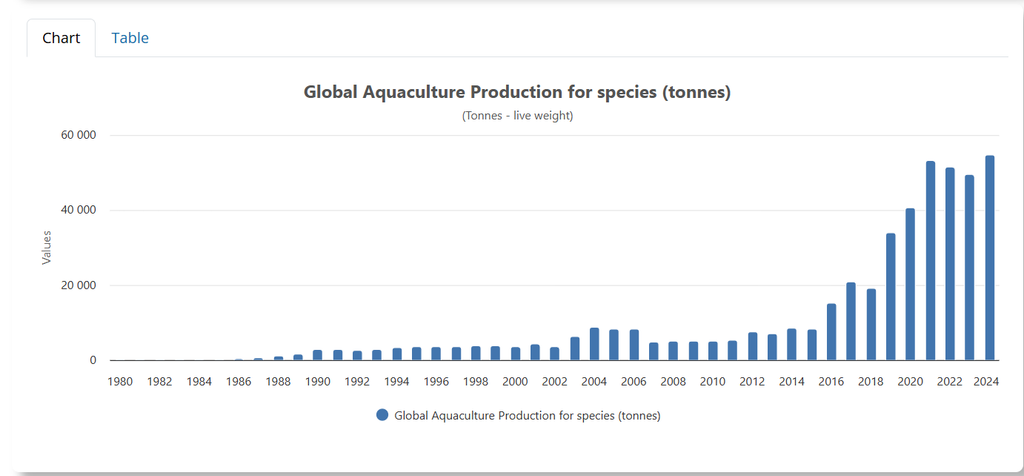
Although aquaculture still represents a relatively small share of Iceland’s total seafood production, its growth has been remarkable.
Fish farming more than tripled its output between 2012 and 2022, reaching around 50,000 tonnes, while total aquaculture production exceeded 51,000 tonnes in 2022—more than six times the volume recorded in 2010.
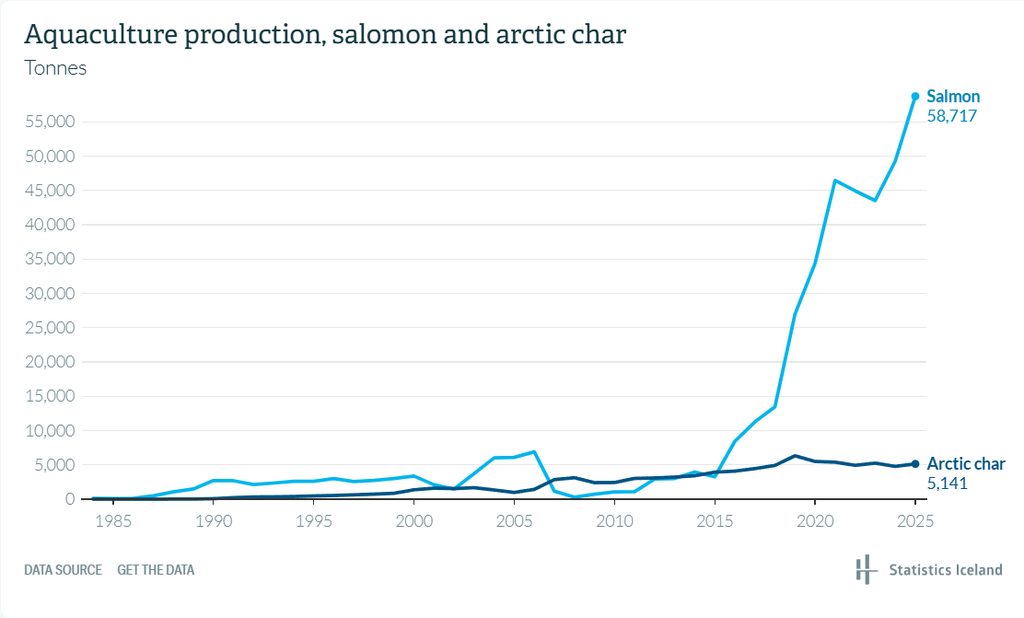
Atlantic salmon has been the driving force behind this expansion. Annual production remained below 4000 tonnes until 2015 before increasing rapidly in the years that followed, reaching almost 45,000 tonnes by 2022.
Today, production is concentrated primarily in the Westfjords and Eastfjords, where salmon are reared in sea cages positioned close to shore. These sites combine cold, clean waters with greater protection from harsh offshore conditions, making sea-based farming a more economical option than land-based production.
Figure 1 illustrates the pace of this growth. Atlantic salmon production has risen sharply since the mid-2010s, reaching almost 59,000 tonnes in 2025, while Arctic char production has continued its steady upward trend to just over 5000 tonnes.
Leading the world in Arctic char
Alongside its expanding salmon industry, Iceland has established itself as the world’s leading producer of farmed Arctic char, supplying more than half of global production.
Production has increased steadily over the past two decades, rising from less than 1000 tonnes in 2005 to almost 4500 tonnes in 2017 before exceeding 4800 tonnes in 2022. Most Arctic char is produced using land-based grow-out systems, although some producers also utilise sea cages.
Ásgeirsson believes Iceland’s success extends beyond its natural resources.
“One of the greatest strengths has been the successful transfer of expertise from Iceland’s well-established seafood industry into salmon farming,” he explains. “Combined with Iceland’s unique water resources, including naturally sand-filtered seawater through volcanic lava fields, this has enabled highly efficient and innovative production systems.”
Making full use of every fish
Sustainability in Iceland extends well beyond production. Resource efficiency has become a defining characteristic of the country’s seafood industry, with processors increasingly finding commercial uses for parts of the fish that were once regarded as waste.
Heads, tongues, cheeks, skins, livers and other by-products are now utilised in a wide range of value-added products, supported by continual advances in processing technology.
Looking ahead, Ásgeirsson believes further innovation will be needed to improve resource utilisation within land-based aquaculture.
“One of the most important challenges for land-based aquaculture is developing commercially viable solutions for utilising sludge as a valuable resource rather than a waste product,” he says as an example. “Companies across the industry are working closely with authorities and technology providers to develop sustainable long-term solutions. With land-based operations and conditions in Iceland, the industry will take advantage of superior fish health and develop practices towards best-in-class production efficiency.”
Looking ahead
A 2023 report from Iceland’s Ministry of Food, Agriculture and Fisheries identified aquaculture as having the potential to become a significant pillar of the national economy.
Despite this optimism, Ásgeirsson believes the industry’s immediate opportunities lie in expanding production rather than increasing downstream processing.
“Given Iceland’s distance from major markets and the relatively early stage of development of the industry, I do not expect significant investment in value-added processing in the short to medium term,” he notes. “The greatest opportunities lie in expanding sustainable salmon production while continuing to build strong international market access.”
The report also stresses that future growth must be balanced with environmental and societal considerations, including impacts on local ecosystems, wild salmon populations and greenhouse gas emissions. At the same time, it highlights the industry’s potential to strengthen employment and economic activity in smaller coastal communities, provided development is supported by responsible management of shared marine resources.
As policymakers consider the next phase of aquaculture development, the emphasis remains on enabling sustainable growth through informed policy decisions while recognising that technological innovation and changing market conditions will continue to shape the sector.
With a world-leading Arctic char industry, rapidly expanding salmon production, a mature seafood processing sector and strong fish health standards, Iceland is well placed to strengthen its position as one of Europe’s most dynamic aquaculture nations.
For references, contact editorial@perendale.co.uk
-ends-
Caption:
CfIAF2608_CountryFocus-1_962_PS – Figure 1. Iceland’s aquaculture production has accelerated dramatically over the past decade (Source: Statistics Iceland)
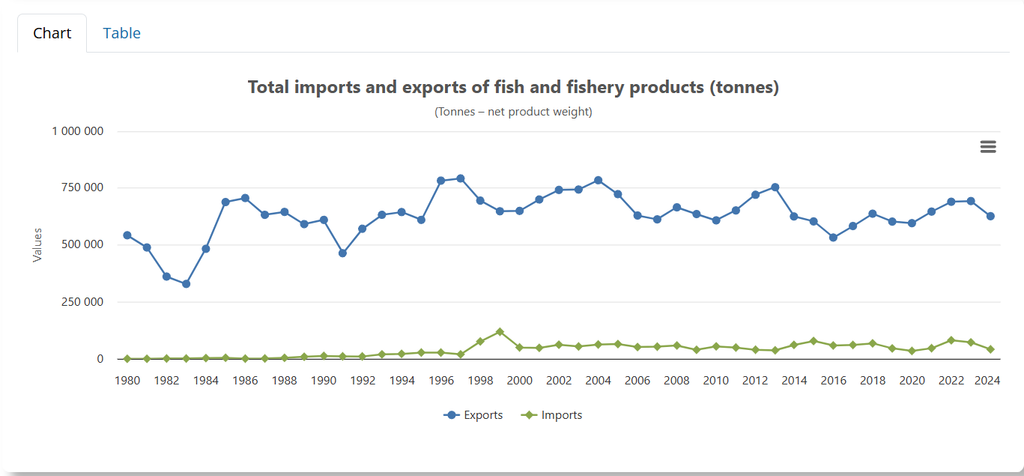
CfIAF2608_CountryFocus-2_962_PS – Figure 2. Seafood exports continue to dominate Iceland’s fish trade, reflecting the sector’s long-standing importance to the national economy (Source: Statistics Iceland)
CfIAF2608_CountryFocus-3_962_PS – Figure 3. Iceland’s Arctic char industry has expanded in line with growing global production, with the country continuing to account for more than half of worldwide farmed Arctic char output (Source: Statistics Iceland)
CfIAF2608_CountryFocus-4_962_PS – © Laxey
CfIAF2608_CountryFocus-5_962_PS – © Laxey
CfIAF2608_CountryFocus-6_962_PS – © Laxey
CfIAF2608_CountryFocus-7_962_PS – © Matorka