






























by Dr Mahmoud Abdel-Hady, Aquaculture Consultant, Egypt and Prof Abdel-Fattah M. El-Sayed, Oceanography Department, Faculty of Science, Alexandria University, Egypt
Egypt has evolved from a modest fish producer into Africa’s largest aquaculture contributor and one of the world’s leading tilapia producers. The aquaculture sector has made substantial progress and gained considerable achievements over the last three decades. Yet, the sector now faces pressing challenges: how to sustain production, improve resilience and create value in an increasingly resource-constrained future.
Aquaculture history and current status
More than 4000 years ago, ancient Egyptians practiced fish (tilapia) farming by developing and managing drainable fish ponds, integrated with crops by water and nutrient reuse. Although aquaculture technologies have changed dramatically since then, the principles of resource efficiency, nutrient recycling and integrated production that underpin modern sustainable aquaculture were already evident in these early systems. Egypt’s aquaculture history, therefore, offers valuable lessons for the future of sustainable production.
The development of modern aquaculture in Egypt began nearly a century ago. The first experimental farm (The Barrage Farm) was established in 1929, laying the foundation for scientific and commercial advancements in the sector. Consequently, the first commercial fish farm was established in 1957, marking the first step of a modern aquaculture industry that would later evolve into one of the largest and most successful in Africa and among the top contributors in the world. As a result, fish has become one of the most affordable and accessible animal protein sources for Egyptian households, reducing pressure on more expensive, unaffordable red meat and poultry.
Sixteen aquatic species are currently cultured in Egypt, with an annual production of approximately 1.6 million tonnes. This species diversification would likely reduce market risk while opening opportunities for higher-value domestic and export markets. However, Nile tilapia occupy and will likely continue to occupy, a central place in Egyptian fish production for millennia. The commercial potential of tilapia remained constrained until the widespread adoption of all-male hatchery technologies in the mid-1990s, which transformed the species into the main driver of aquaculture growth. Tilapia production increased from around 22,000 tonnes in 1995 to nearly one million tonnes in 2024, accounting for over 60 percent of aquaculture production. As Egypt’s most important farmed fish species, annual per capita tilapia consumption approaches 10 kg, representing nearly 50 percent of total fish consumption and underscoring its central role in national food security.
Another major driver of Egypt’s aquaculture expansion was the development of a modern aquafeed industry. Beginning in the early 2000s, feed extrusion technology gradually replaced conventional pelleted feed manufacturing. Today, Egypt has a well-established aquaculture feed industry, comprising over 110 mills, including five multinational companies. This shift improved feed efficiency, growth performance and resource-use efficiency. Feed-credit arrangements further facilitated adoption among small- and medium-scale producers.

Major achievements of this sector
Together, advances in hatchery, farming and feed extrusion technologies enabled the widespread adoption of semi-intensive pond farming and substantial productivity gains, allowing production to expand despite the relatively stable farming area and the gradual phase-out of freshwater cage farming in the Nile. Combined with farmers’ accumulated experience, these developments transformed Egyptian aquaculture into the largest aquaculture industry in Africa and the Middle East and the seventh largest globally, producing approximately 1.6 million tonnes annually and supplying nearly 80 percent of the country’s fish production. The sector is also a major contributor to rural livelihoods and economic development, supporting an estimated 203,000 jobs across the value chain. Today, Egyptian aquaculture encompasses a range of production systems and cultured species, including tilapia, mullets, African catfish, seabass, seabream, meagre, shrimp and several emerging marine species.
Emerging technological developments and industry trends
Although technologies such as recirculating aquaculture systems (RAS), bioflocs, aquaponics and in-pond raceway systems (IPRS) are attracting increasing interest, their adoption remains limited by high capital and energy requirements, land tenure constraints and production costs that are often higher than those of conventional semi-intensive systems in earthen ponds. Nevertheless, efforts to adapt these technologies to local conditions are continuing and their importance may increase in the future as the sector faces growing challenges related to water scarcity, water quality deterioration and climate change.

Major challenges facing the sector
While Egyptian aquaculture expanded rapidly over the past three decades, growth has slightly slowed. Future growth will depend on overcoming technical, economic, social, environmental and governance constraints while improving productivity, resilience and resource-use efficiency.
Despite major advances in hatchery and feed technologies, important constraints remain. Approximately 34 percent of aquaculture production volume and 57 percent of production value still depend on species that rely on wild seed collection, particularly mullets, meagre and a large proportion of seabass and seabream production. This dependence creates uncertainty of seed supply and may limit future expansion of higher-value aquaculture. Increasing production intensity has also heightened concerns about fish health, biosecurity and emerging disease risks.
The sector also remains highly dependent on imported feed ingredients, particularly soybean meal and maize, exposing producers to global commodity markets, exchange-rate volatility and foreign-currency shortages. Between 2015 and 2024, feed prices increased approximately fivefold, while fuel and electricity costs rose by around threefold and sixfold, respectively. In many cases, production costs have increased faster than fish prices, reducing profitability and limiting reinvestment in farm modernisation.
Many producers, particularly small- and medium-scale farmers, continue to face constraints related to access to finance, insurance, technical support and long-term investment security. These challenges are compounded by land-tenure issues, especially rapidly increasing rental fees and relatively short lease periods, creating uncertainty and discouraging long-term investment in infrastructure, renewable energy and advanced production technologies.
Water scarcity is the sector’s most important long-term challenge. Competition for water among agriculture, municipalities, industries and aquaculture is intensifying, while increasing reliance on agricultural drainage water and water-reuse schemes has raised concerns about water quality in some production areas. Aquaculture practitioners are increasingly required to invest in water quality management and expand water recycling systems, such as RAS, Biofloc, aquaponics and IMTA.
Climate change compounds these pressures. Because much of Egypt’s aquaculture production is concentrated in the low-lying North Nile Delta, the sector remains vulnerable to sea-level rise, saltwater intrusion and extreme weather events. Some assessments suggest that areas currently responsible for 50–55 percent of aquaculture production could face future inundation risks. At the same time, concerns remain regarding data quality and the accuracy of production statistics, highlighting the need for stronger monitoring and reporting systems.
Although Egypt is one of the world’s largest aquaculture producers, the sector remains heavily oriented toward domestic markets. Export potential is constrained by challenges related to quality control, certification, traceability, risk assessment, processing capacity and cold-chain infrastructure. Tackling these export issues would help unlock considerable export potential. Notably, the recent lifting of the European Union’s ban on Egyptian fish exports presents a major milestone in the development of Egypt’s fish export industry.
Taken together, these challenges suggest that the next phase of Egypt’s aquaculture development will depend less on expanding production area and more on improving efficiency, resilience, governance and value creation across the aquaculture value chain.
The way forward
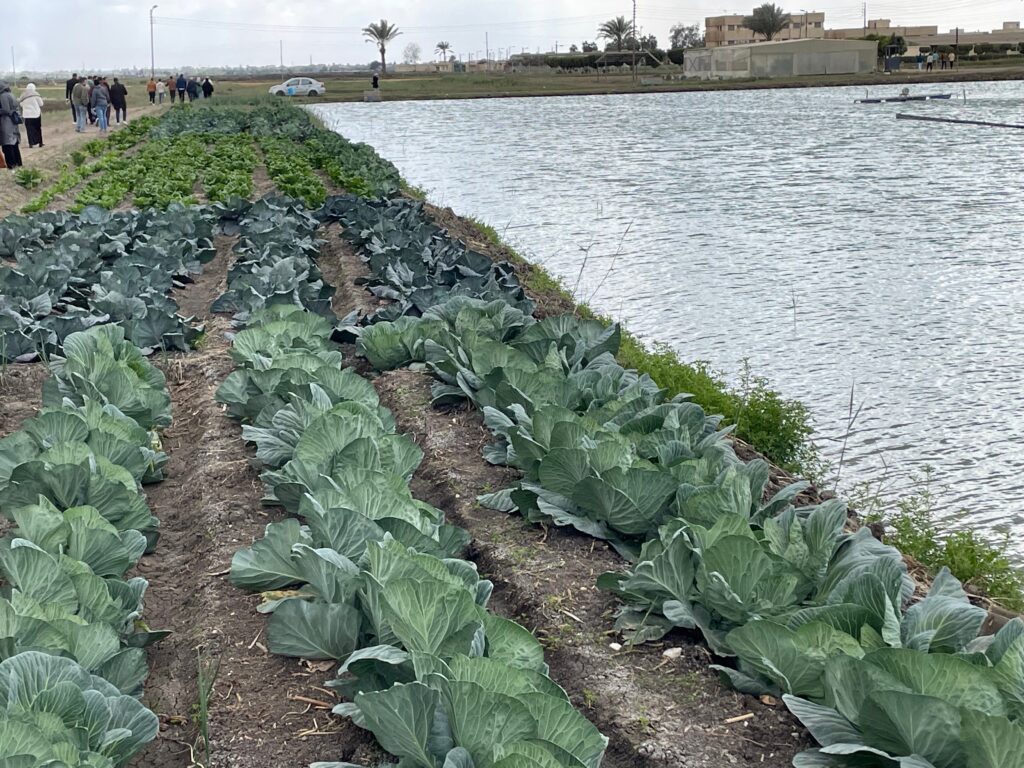
Future growth of Egypt’s aquaculture sector will depend not only on increasing production but also on improving sustainability, resilience and governance across the value chain. Integrated aquaculture–agriculture systems offer a promising pathway for improving resource-use efficiency, particularly within large agricultural enterprises able to invest in innovation, renewable energy and modern production technologies.
Nile tilapia will remain the cornerstone of Egyptian aquaculture; yet, substantial gains could be achieved through the adoption of genetically improved strains with faster growth, greater disease resistance and better tolerance to low winter temperatures. Creating an enabling environment that attracts international breeding companies and encourages investment in genetic improvement should, therefore, be a strategic priority.
The sector must also continue its transition from capture-based aquaculture toward hatchery-based marine aquaculture. Reducing reliance on wild seed, particularly for high-value marine and brackishwater species and replacing trash-fish feeding with formulated feeds would improve sustainability, strengthen biosecurity and reduce pressure on natural fish stocks.
Government policy will be equally important. Aquaculture should be formally recognised as a legitimate and strategic user of land and water resources, supported by secure tenure arrangements, predictable leasing systems and reliable access to water. Greater availability of suitable saline and low-productivity lands could also create opportunities for responsible expansion where environmental conditions permit.
The sector must accelerate the adoption of renewable-energy technologies as rising energy costs increasingly affect profitability and competitiveness. Wider adoption will depend on access to finance, long-term investment security and supportive policy frameworks.
Equally important is strengthening the institutional foundations for the industry. Establishing a comprehensive and timely aquaculture statistics system would support evidence-based planning and investment decisions. Meanwhile, closer collaboration between research institutions and industry would help ensure that research priorities address producers’ needs. Expanding certification, traceability and quality assurance systems will also be essential for improving market access and unlocking export opportunities.
Finally, the future of Egyptian aquaculture will have to depend on stronger collaboration among producers, researchers, policymakers, investors and industry organisations. If these efforts succeed, Egypt can build on its achievements and develop a more competitive, resilient and globally recognised aquaculture sector for the decades ahead.