































A recent RaboResearch study indicates that the world aquaculture sector is about to enter a phase of limited supply and unstable prices for fish oil and fish meal. As the output of high-value aquaculture species continues to grow, demand for these essential feed ingredients is rising. However, the supply of marine ingredients is stagnating, leaving the industry vulnerable to shocks from El Nino events and climate change.
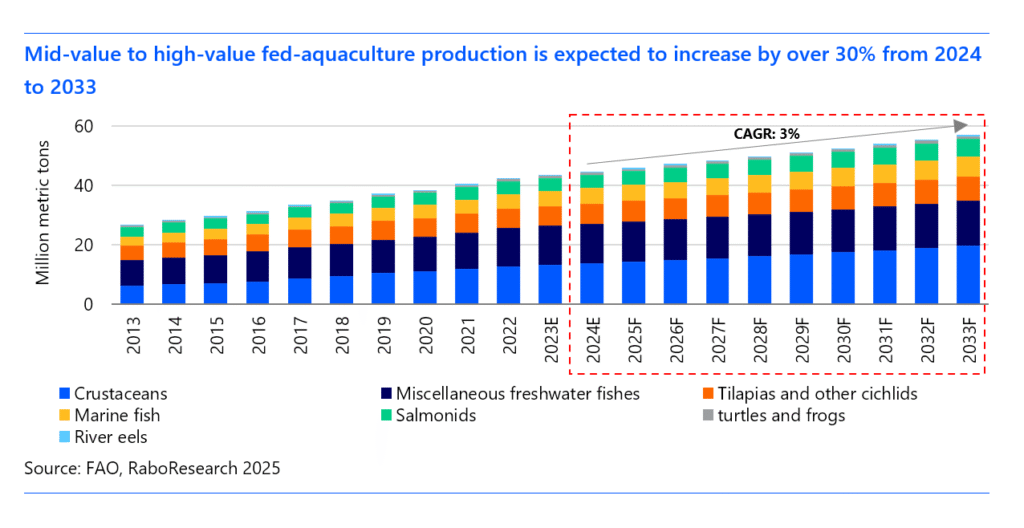
“From 2024 to 2033, the production of mid-value and high-value fed aquaculture species is projected to grow at a compound annual growth rate of 3%, resulting in an increase of approximately 12 million metric tons over the next decade,” says Novel Sharma, Seafood Analyst for RaboResearch.Higher trophic-level finfish and crustaceans, which primarily rely on fish meal and fish oil as essential supplies of protein and omega-3 fatty acids, will be the main drivers of this expansion.
The report warns that current supplies of fish oil and meal will not be enough to fulfil future demand at present inclusion rates. Since the majority of wild-capture fisheries have reached sustainable harvest limits, the yearly production of fish oil and fish meal has remained steady at 5.5–6 million metric tons. It is anticipated that this mismatch will raise prices and increase the market’s sensitivity to even minor supply disruptions.
“Given the limited availability of effective substitutes at scale, even modest supply disruptions can lead to sharp price increases,” cautions Sharma. Fish oil shortages are expected to worsen throughout the course of the decade, while fish meal shortages may appear as early as 2028.
According to the report, output fluctuations might reduce global supply by as much as 20%. Though Peru, the world’s largest producer of fish meal and oil, continues to play a significant role in the market. A supply shock brought on by climate change in Peru in 2023 caused prices to rise to all-time highs. This incident demonstrated how price changes can be amplified by concentrated supply and inelastic demand. Even though previous disruptions were brief, the widening gap between supply and demand raises the possibility that instability could continue.
Sharma also highlights the necessity of innovation and teamwork to reduce these risks and guarantee long-term success. Future aquafeed formulations will require alternative feed ingredients like algal oil and insect meal, not only as substitutes but as essential components. He adds that building resilience in a resource-constrained environment will require a strategic mindset and collaboration across the value chain.