





























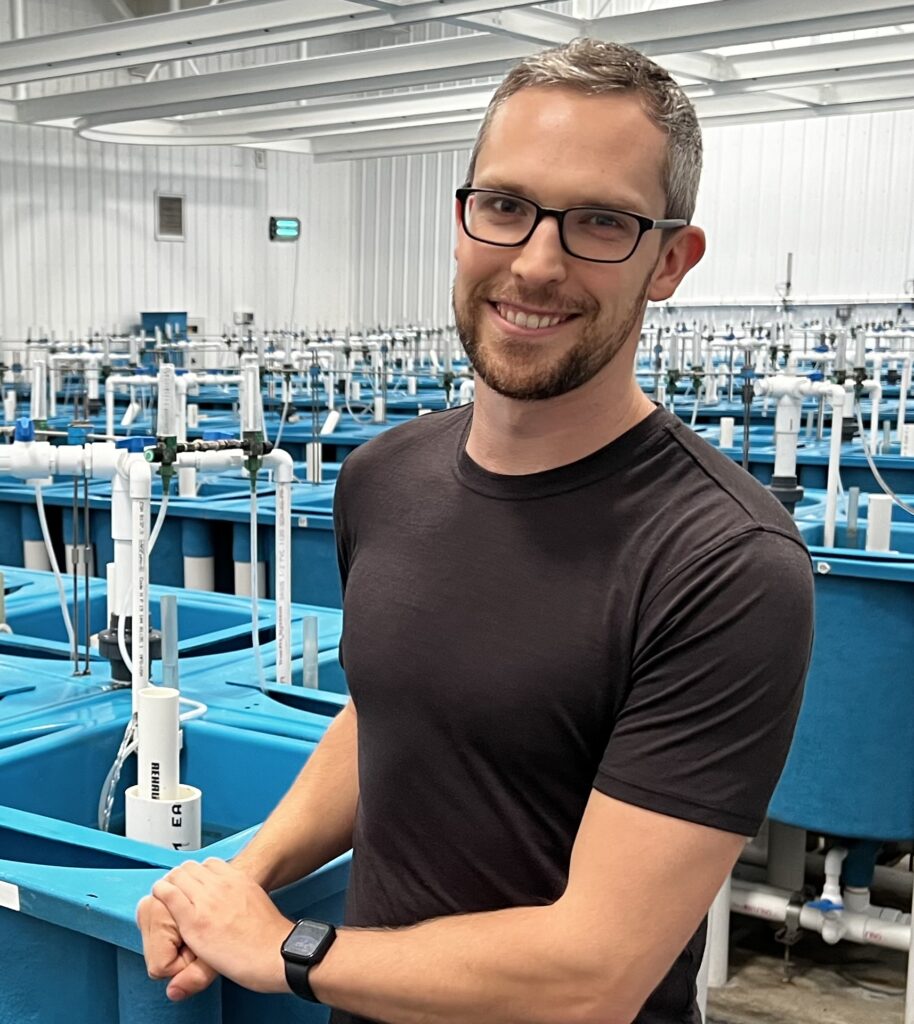
The Center for Aquaculture Technologies (CAT) has announced the appointment of Sam May as the Genetic Services Lead for the United States and Canada. This move comes as part of CAT’s ongoing commitment to enhance genetic improvement and support strategic breeding programs.
May brings extensive experience in salmon genetics, selective breeding, and coral research. His interest in genetics took off during a university course and led to a Ph.D. in Genetics. He previously managed the USDA salmon selective breeding program in Maine, where he worked on improving breeding efficiency through cryopreservation, trait optimisation, and genetic diversity.
At CAT, May looks forward to transitioning from academic theory to practical applications. “I wanted to move from academic theory to real-world impact,” he stated. “CAT offered the opportunity to work across species, solve complex problems, and help clients make meaningful genetic gains.” He is also attracted to CAT’s collaborative environment and innovative focus on aquaculture.
CAT is recognised globally for aquaculture genetics, operating over 20 breeding programs across numerous aquatic species. The organisation uses a set of over 50 genomic tools along with expertise in advanced data analytics, genome editing, and quantitative breeding strategies to deliver tailored genetic solutions. These innovations aim to enhance performance, sustainability, and profitability for their clients.
“Bringing Sam on board strengthens our support for clients across North America,” said Klara Verbyla, VP of Genetic Improvement. “His diverse experience enhances our ability to apply advanced genetic tools in practical settings, delivering real value to our clients.”
In his new role, May will oversee selective breeding programs, enabling clients to adopt new technologies, streamline processes, and make smarter, data-driven decisions in breeding.
“Genetics is one of the most powerful tools the industry has to tackle challenges like disease resistance, growth, and sustainability,” May noted. “By applying the right tools, we help producers raise healthier, more efficient fish that meet evolving market demands.”
As the aquaculture sector adapts to changing environmental conditions and production challenges, CAT remains committed to providing clients with state-of-the-art genetic solutions that promote healthier fish and meet market needs, the organisation notes.