
































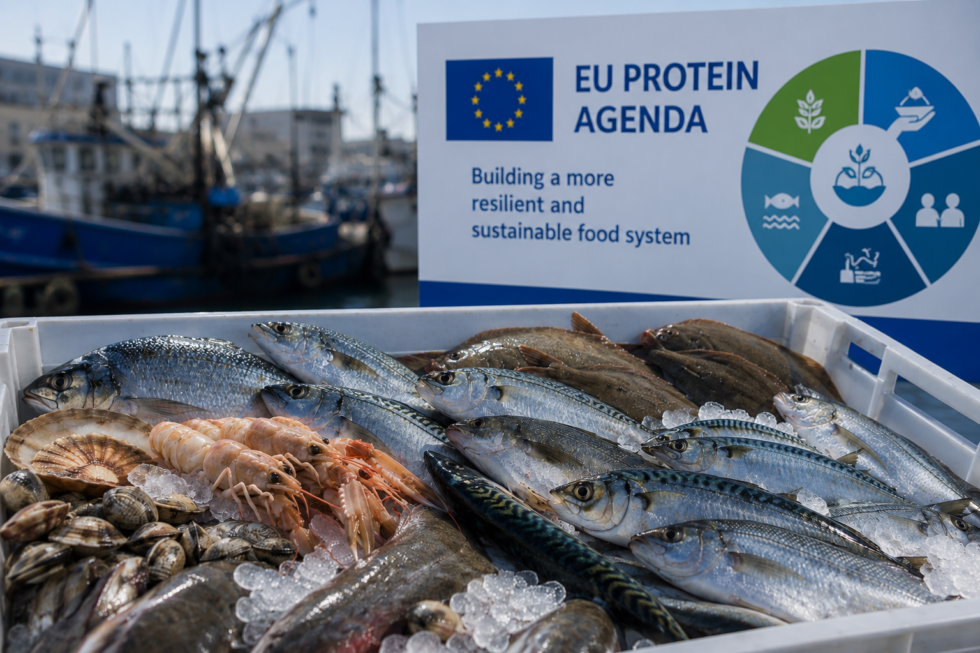
The European Union Seafood Alliance (EUSeA) has welcomed the European Commission’s renewed focus on protein resilience, strategic autonomy and sustainable food systems following the publication of its Action Plan for the resilience, strategic autonomy and sustainability of the EU protein system and the EU Strategy on Livestock.
The alliance, which represents EAPO, Europêche, FEAP, Seafood Europe and EMPA, said the initiatives mark an important step towards strengthening Europe’s food system. However, it argued that the EU’s protein strategy remains incomplete without the inclusion of aquatic foods.
EUSeA highlighted that seafood already provides a nutritious, high-quality source of protein while supporting healthy diets, coastal communities, responsible production, employment, trade, consumer choice and food system resilience.
The alliance said fisheries, aquaculture, seafood processing and trade should form part of the EU’s food security and competitiveness agenda. It noted that while the European Commission has recently recognised livestock as a strategic component of Europe’s food security, fisheries and aquaculture deserve the same level of recognition.
EUSeA called for a broader shift in policy that recognises aquatic food production as a key contributor to food security, coastal resilience, strategic autonomy and the sustainable management of marine resources. It also urged greater coordination across European Commission departments to ensure aquatic foods are fully integrated into the EU’s protein agenda.
The alliance reiterated its call for an EU Action Plan for Blue Foods to be incorporated into the forthcoming Vision for Fisheries and Aquaculture 2040, describing it as the Commission’s main strategic framework for strengthening the role of aquatic foods within Europe’s food system.
EUSeA also highlighted the potential of fisheries and aquaculture by-products to create higher-value products, including food ingredients, nutraceuticals, cosmetics, biomaterials, packaging, construction materials, water treatment solutions, soil amendments and bio-based fertilisers. It added that these initiatives could also create new value chains for invasive species and species with limited commercial demand.
The alliance said it stands ready to work with the European Commission on the development of the Vision for Fisheries and Aquaculture 2040 and the implementation of the EU protein and livestock agenda to ensure Europe’s protein strategy reflects the contribution of all responsible food sectors, including aquatic foods.