






























by Antonio Coli, Global Sales Director; Nils Tokle, CTO & Co-Founder; and Kostas Tzakris, Technical Manager, Planktonic, Norway
Gilthead Seabream (Sparus aurata) hatcheries operate under constant pressure to deliver uniform, high-quality juveniles for on-growing on schedule. Subsequently, sea-cages operations are required to consistently provide timely delivery of high-quality fish of appropriate size to the sales department, with profitability as a core objective. The management of costs, labour, production and environmental risks is an integral part of daily operations across the entire value chain.
At the initial stage in hatcheries, innovative methods that reduce dependence on traditional live feeds, while enhancing growth, survival rates and product quality, play a crucial role in commercial production up to harvest.
CryoPlankton refers to the cryopreserved form of barnacle nauplii, formulated to facilitate larval nutrition via controlled and consistent delivery. In this study, the CryoPlankton products used for Gilthead Seabream larval rearing were Cryo-S and Cryo-L. These two products originate from different barnacle species (Balanus crenatus and Semibalanus balanoides respectively) and differ in their size profiles. Three different feeding protocols in terms of duration and quantity of barnacle nauplii were tested, namely the Intense, Mild and Reduced Live Feed, compared to a standard Control protocol. Performance evaluation encompassed an extended period, including hatchery survival and growth rates, nursery feed efficiency and deformity frequencies, as well as a period of on-growing in sea cages.
Description of the project
First feeding
The project took place in the Institute of Marine Biology, Biotechnology and Aquaculture (IMBBC) of the Hellenic Centre of Marine Research (HCMR) in Crete, Greece. The HCMR aquaculture facilities are certified by the national veterinary authority and are licensed for operations of breeding and experimentation with fish issued by Region of Crete.
Fertilised eggs of gilthead seabream, were transferred from a commercial hatchery and were equally distributed into the larval tanks, reaching a stocking density of 120 larvae/L.
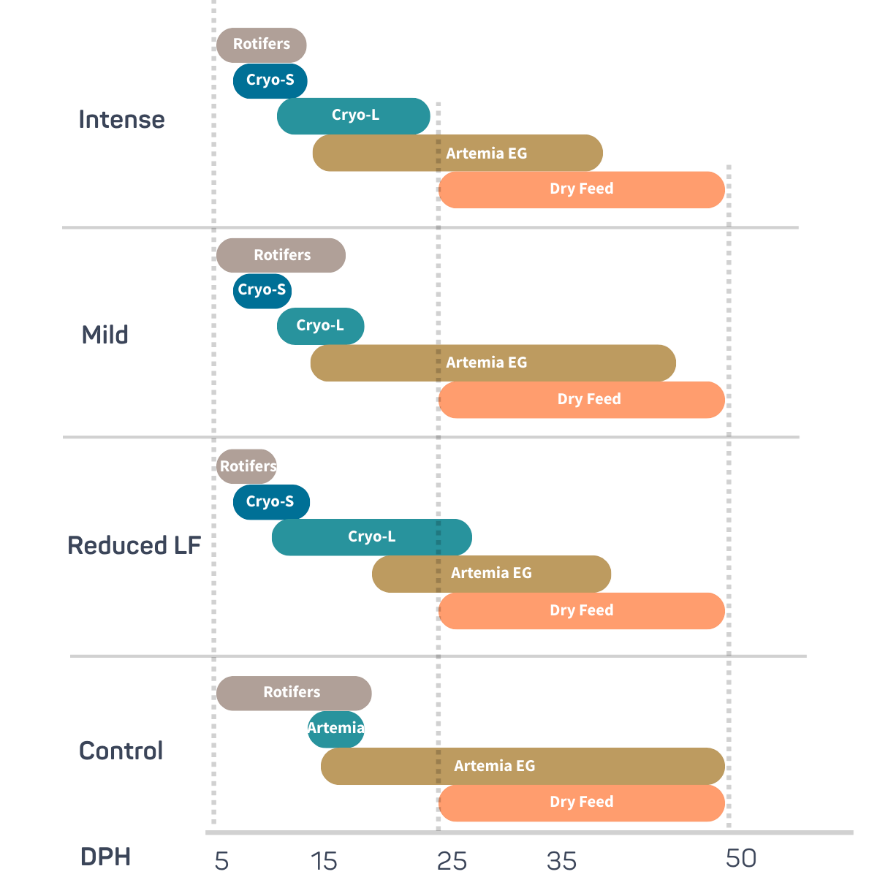
The CryoPlankton products, Cryo-S and Cryo-L, were utilised in three different feeding regimes in quadruplicates, to test their efficiency against the Control protocol:
- Intense: In the intense approach, high replacement of rotifers and Artemia was achieved, reaching 54 percent in rotifer reduction and 43 percent in the quantity of Artemia cysts.
- Mild: The replacement ratio was less than all other test approaches. The rotifer replacement ratio reached 33 percent and the enriched Artemia was reduced by 22 percent.
- Reduced Live Feed (Reduced LF): In this approach, the traditional live feeds decreased further, reaching -68 percent of rotifer replacement and -48 percent of the enriched Artemia quantity.
- Control: The Control protocol is the standard protocol of the institute for rearing seabream larvae, using rotifers, small Artemia and enriched Artemia.
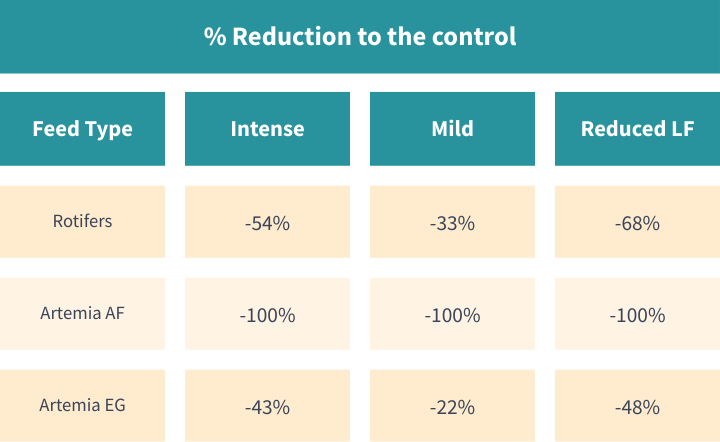
Small Artemia was totally replaced in the CryoPlankton treatments.
CryoPlankton were distributed through peristaltic pumps, delivering the required amount continuously over a 24-hour period. Rotifers, Artemia nauplii and phytoplankton were delivered using a computer-controlled distribution system with a peristaltic pump and solenoid valves.
All tanks received dry feed at the same age, with hand feeding for the first five days followed by automatic feeders.
Physicochemical parameters—temperature, pH and O₂—were recorded multiple times daily. Total length was frequently measured in all tanks, while wet weight was obtained weekly from two tanks per treatment. Siphoning, filter changes, cleaning and surface skimmer installation were performed equally for all treatments.
The protocols were implemented in quadruplicate 500L cylindroconical tanks, and are schematically shown in Table 1.
The hatchery period ended at 51 days post-hatch (dph), when the larvae were weighed to calculate survival and transferred to the nursery department.
Nursery rearing
The 16 larval tanks were transferred to 12x10m3 tanks in a RAS. Automatic feeders in each tank dispensed dry feed at three percent of total biomass, adjusted visually. Tanks were siphoned daily and mortality was recorded.
During the nursery period, fish were handled for sorting (on 59, 67 and 101dph) to create homogeneous groups for further on-growing.
At 96dph, a fish sample from each treatment was checked for deformities using soft X-rays. At 100dph, fish without SB were removed by floating. At 114dph, fish were bath-vaccinated with commercial vaccines against Vibrio anguillarum and Photobacterium damselae. Additionally, an autogenous vaccine from HCMR was used against Vibrio harveyi.
Grading of populations was necessary to select a part of the population with similar and appropriate size to stock in the cages. There were three gradings:
- 59dph: Grading with a 2.0mm bar. The ‘small’ group under the bar was discarded.
- 67dph: Grading with a 3.0mm bar. The ‘big’ group above the bar was discarded.
- 101dph: Grading with two bars: 4.5mm and 5.0mm. Only the middle-sized fish were selected to avoid any bias in the results of the on-growing stage.
At 122dph, approximately 5000 fish at three grams from each treatment were transferred to the pilot netpen cage farm of the Institute at Souda Βay, Crete, in February 2025. Fish remained in the farm for 225 days.
On-growing
Fish from each treatment were placed in separate, adjacent nets. Mean Weight (MW) was recorded monthly. Feeding followed the farm’s standard table. Population biomass and MW were measured at the end of the trial. FCR (commercial) was calculated from farm data, highlighting key findings for CryoPlankton in bream farming. No major events affected fish performance or KPI accuracy during the on-growing period.
Results
This trial showed that using CryoPlankton live feed early in the development of the seabream, improves both short- and long-term performance. Nutrition during the larval phase greatly affects later growth, offering impressive economic advantages.
Hatchery
The replacement ratio of the traditional live feeds is shown in Table 2. KPIs were seriously improved.
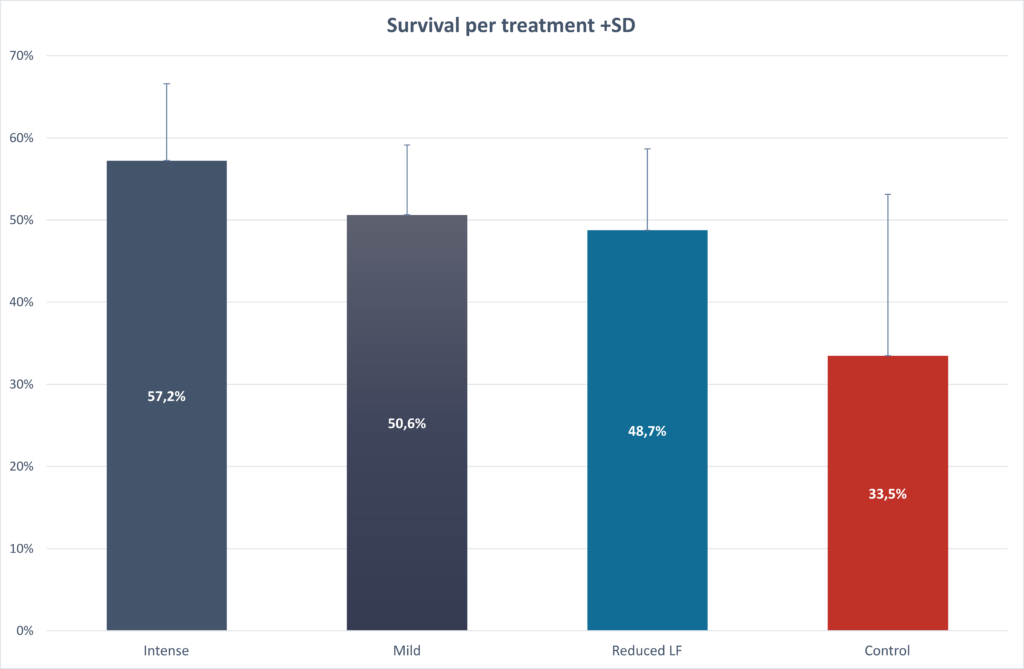
Survival rates in the hatchery varied notably between CryoPlankton treatments and the Control (Figure 1). The Intense protocol yielded the highest improvement, with a 71 percent increase over Control. Mild and Reduced LF protocols showed similar gains, with 51.3 percent and 45.6 percent more fish, respectively, compared to the Control.
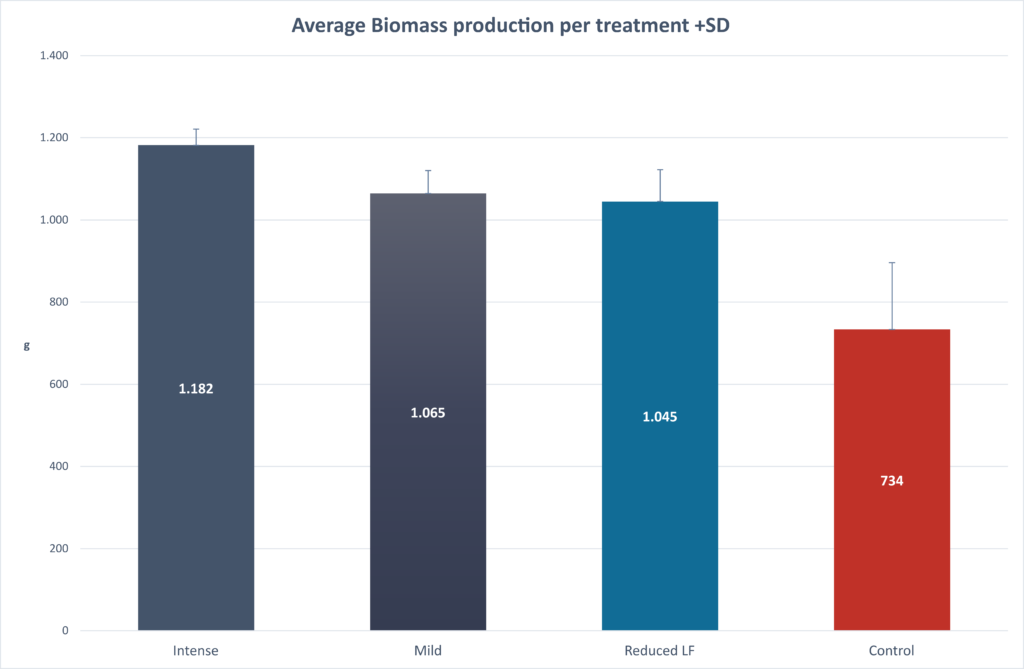
The CryoPlankton treatments also showed improved biomass production in the hatchery (Figure 2), with percentage increases similar to those seen in survival rates compared to the control.
Larvae growth in terms of Total Length was also higher for the CryoPlankton treatments. The linear growth rate varied from 0.225 mm d-1 for the Control to 0.243 mm d-1 for the Reduced LF, Mild showed 0.236 mm d-1 and Intense 0.231 mm d-1.
Nursery
During nursery, three main size gradings were applied to produce bream fry of uniform size for sea cage stocking. Fish in the CryoPlankton treatment showed higher growth rates, although this growth advancement was a result from only one week. From 51dph to 59dph, the MW (g) growth rates were: Intense 0.017 g d⁻¹, Mild 0.0186 g d⁻¹, Reduced LF 0.0161 g d⁻¹ and Control 0.014 g d⁻¹.
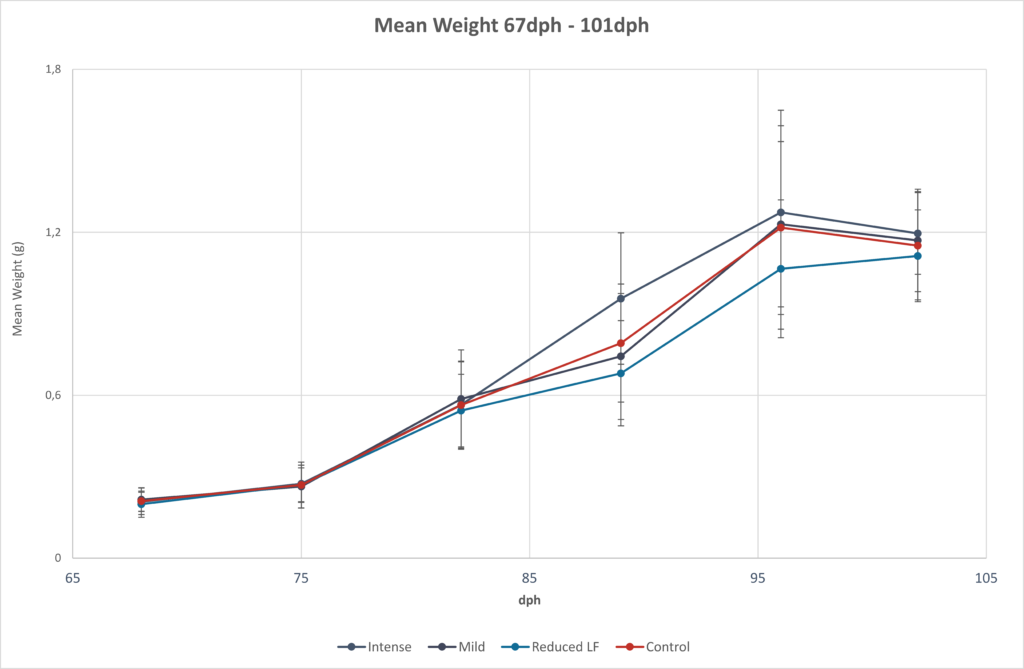
After grading at 67dph, groups were housed separately until 100dph, when fish lacking a functional swim bladder or with visible operculum deformities were removed. Skeletal deformities were checked via X-ray at 96dph. MW measurements proceeded as usual, and Figure 3 shows MW development from 67dph to 101dph.
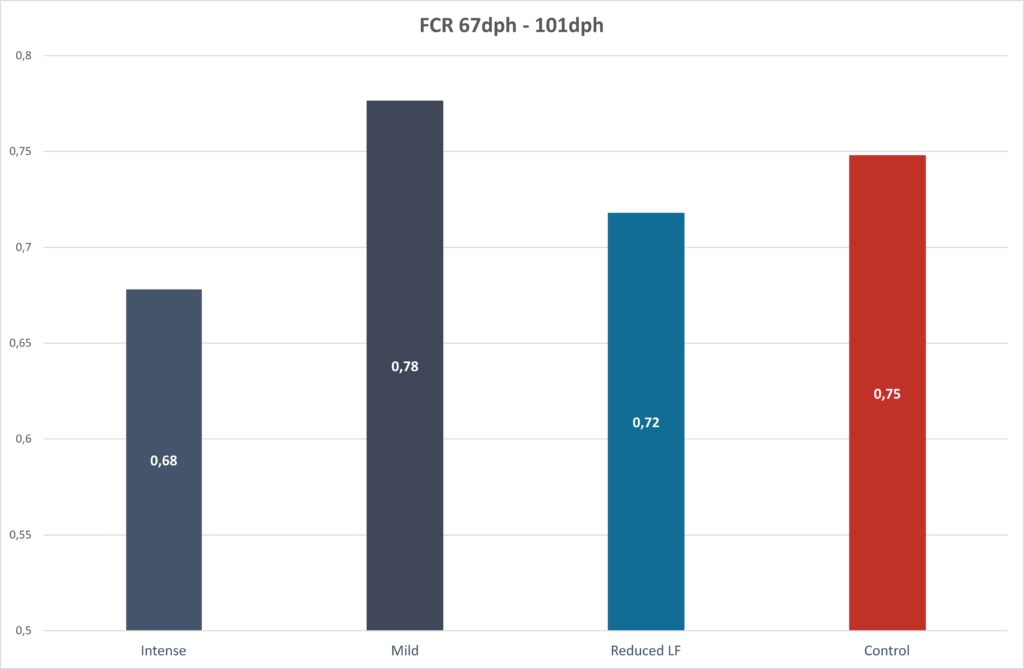
During this period, growth rates were 0.04 g d⁻¹ (Intense), 0.036 44g d⁻¹ (Mild), 0.031 g d⁻¹ (Reduced LF) and 0.036 g d⁻¹ (Control). The Intense treatment, which replaced traditional live feeds at a higher rate, outperformed the others. FCR differences for this period are shown in Figure 4.
The FCR decreased by 9.3 percent with Intense treatment and by four percent with Reduced LF, while Mild treatment led to a 3.8 percent increase. These findings suggest that increased CryoPlankton use improves fish performance.
Deformities
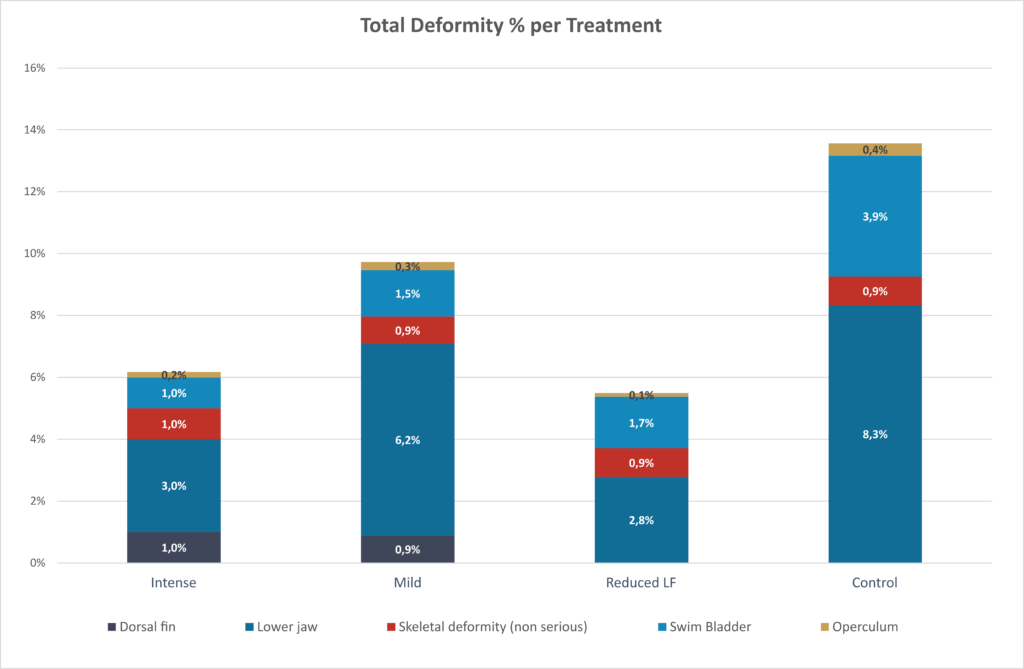
Deformities were assessed using soft X-rays of samples at 96dph. At 100dph, fish were exposed to higher salinity for quality control. Swim bladder and operculum abnormalities for the entire population were recorded during this process and are shown in the following figure (Figure 5) alongside the X-ray results.
The ‘Swim-Bladder’ deformity type was the only type with an occurrence over the three percent threshold. Treatments with higher CryoPlankton usage performed best, while the Control group had the highest deformity rate at 13 percent. Reduced LF was most effective, with just 5.5 percent total deformities—less than half that of the Control.
On-growing
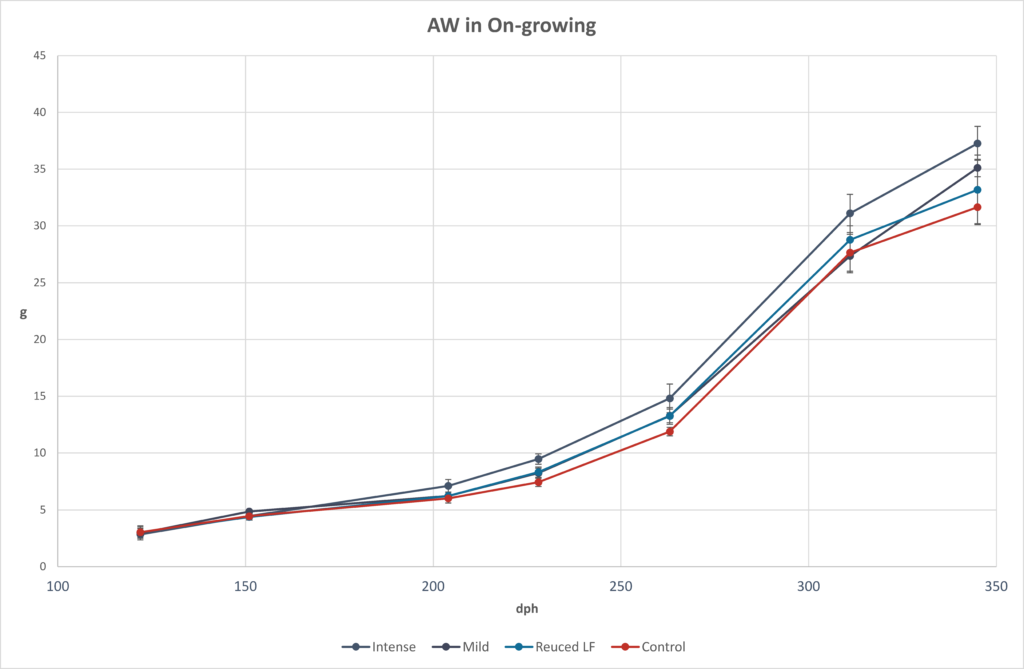
The size gradings in the nursery, formed a population of approximately 5000 fish at 3.0g MW. Those groups were transferred at the age of 122dph at the net-pen farm of HCMR, where they remained for an additional 224 days until harvesting. The development of the MW during this period is presented in Figure 6.
At the end of the period, the MW of the fish from the Intense treatment was higher than the Control by 17.7 percent, 10.9 percent in the Mild treatment and 4.8 percent in the Reduced LF treatment. Since survival rates during on-growing were nearly the same across all treatments, these results are highly significant and could provide substantial economic benefits for the farming industry.
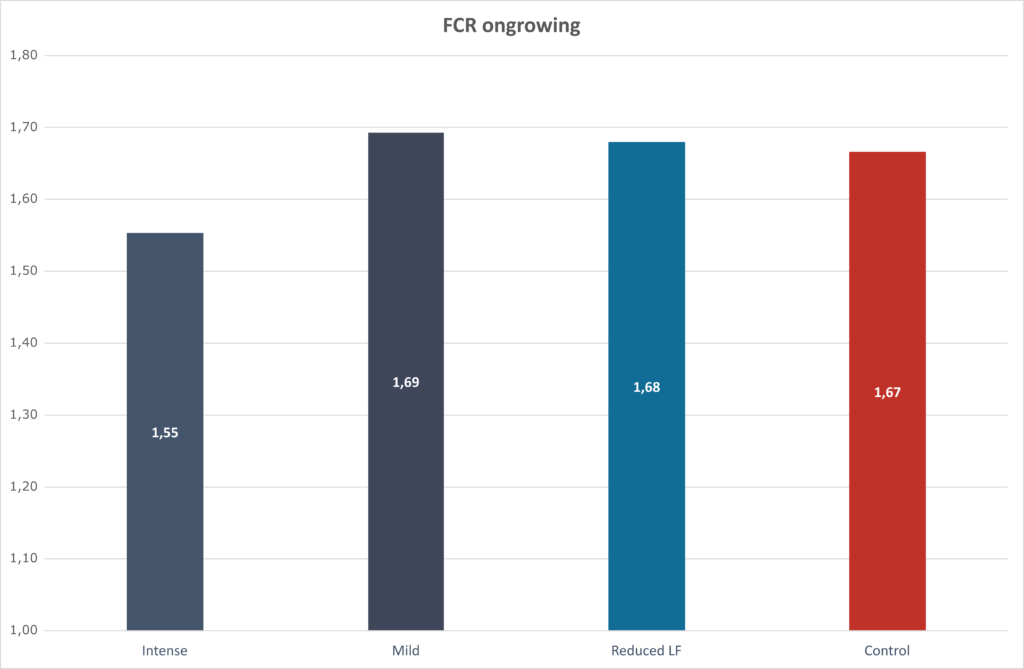
Improved growth is seen alongside enhanced FCR in the Intense treatment (Figure 7). The Intense treatment was likely the best-performing method in the hatchery, demonstrating its long-term effectiveness throughout this experiment. Using CryoPlankton in the hatchery offers lasting benefits and enhances several important KPIs, including FCR.
Discussion
This study indicates that integrating CryoPlankton (Cryo-S and Cryo-L) into gilthead seabream larval rearing serves as an effective approach to enhance critical production metrics while decreasing dependence on traditional live feeds. From a commercial standpoint, the key findings include (i) consistent improvements in hatchery performance and (ii) sustained benefits throughout the on-growing phase.
Hatchery improvements
At 51dph, all groups fed with CryoPlankton showed higher survival rates than the Control group, with the Intense strategy leading the way (+71%), followed by Mild (+51.3%) and Reduced LF (+45.6%). These improvements resulted in a greater overall biomass at the end of the hatchery period. Larvae in the CryoPlankton groups also achieved greater total length compared to the Control. For producers, this outcome, higher survival coupled with maintained or improved growth, means an increase in the total number of fry available for sale, rather than having to rely on surplus assumptions to meet delivery targets.
The most robust hatchery results came from the Intense protocol, indicating that CryoPlankton is most effective when integrated as part of a structured approach, emphasising timing, high replacement ratios, early introduction and broad application. Understanding this is essential for prospective adopters, as achieving the greatest advantages depends on thoughtfully designing protocols rather than just introducing another feed item.
CryoPlankton benefits
CryoPlankton-fed fish gained more weight early (51–59dph), suggesting benefits due to the nutritional advantage of the live feed in the hatchery, may persist through metamorphosis and weaning. Prior to transfer to sea cages, juvenile fish from each treatment were size graded to achieve comparable mean weights for stocking and performance tracking – an essential and standard step that was necessary. However, differences in nursery growth rates influenced the selection outcome, resulting in predominantly larger individuals being chosen from the Control group and predominantly smaller individuals from the CryoPlantkon-fed groups. Despite this, the Intense group had the highest growth rate later in the nursery (67–101dph) and a 9.3 percent better FCR. These results suggest that optimal feed efficiency relies not just on partial replacement, but also on factors like rationing, timing and co-feeding with dry-feed during key developmental stages.
Quality control
Differences among treatments suggest that early feeding strategies can influence development and the proportion of fish meeting quality standards. The reduction in deformity rate improves sellable fry, saves costs associated with removing deformed fish and increases customer satisfaction, thereby significantly impacting the financial performance of the fry production process.
Long-term value
Perhaps the most commercially compelling outcome is that early feeding decisions translated into advantages during on-growing. Those results, suggest that larval nutrition and feeding strategy can ‘programme’ later performance, even after months on standard farm feeds. For farms, higher harvest weights and improved feed efficiency reduce time to market, lower feed cost per kilogram produced and increase the competitiveness and profitability of the production cycle.
Practical implications and next steps
Taken together, CryoPlankton appears to be more than a live-feed replacement: it is a management tool that can improve output, quality and long-term growth/FCR when applied with an appropriate protocol. The long-term findings of this study, are aligned with the research and industry results of other applications, where the improved performance is recorded across multiple species and environments. The biological results are directly linked to economics (cost per million juveniles, cost per kg harvested, labour savings and risk reduction), offering clear profits to CryoPlankton end users. CryoPlankton-based hatchery protocols can reduce reliance on live-feed infrastructure while improving hatchery consistency and farm profitability.
The project was supported by funding from the European Union’s Horizon 2020 research and innovation programme, AquaExcel 3.0.
To know more about how Planktonic is advancing its product development check their video here: https://www.aquafeed.co.uk/how-is-planktonic-advancing-its-product-development/