































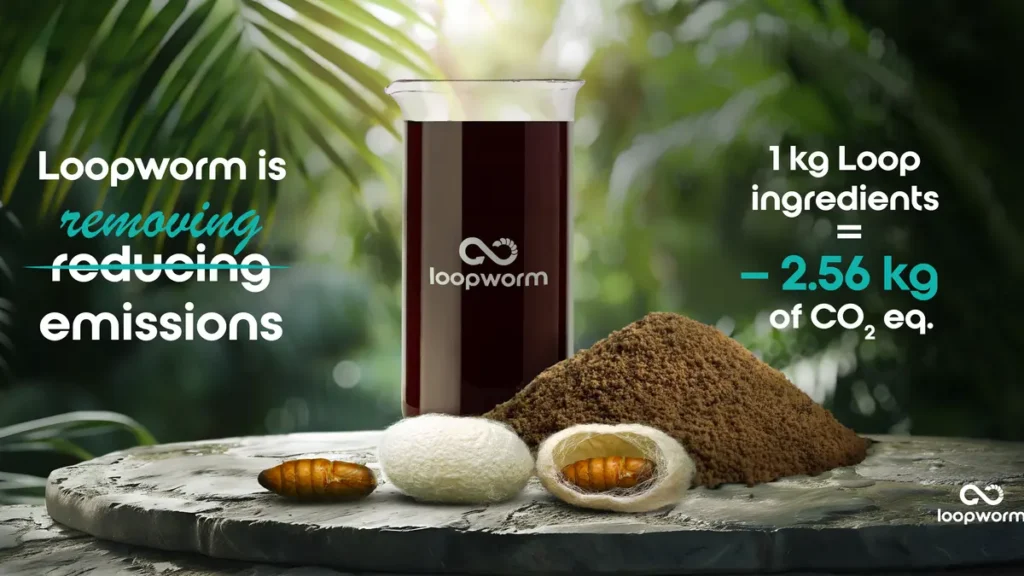
Loopworm has announced the findings of an independent Life Cycle Assessment reporting that its silkworm-based ingredients for pet and animal nutrition are net carbon negative, removing more carbon than they emit. According to the assessment, producing 1kg of the company’s silkworm-based ingredients removes 2.56kg of CO₂ equivalent on a cradle-to-gate basis.
The assessment was carried out by PwC India in accordance with ISO 14040 and ISO 14044 standards, using defined methodologies and system boundaries. It evaluated LoopMeal and LoopOil across 18 impact categories to model environmental effects using the SimaPro LCA tool and the ReCiPe midpoint methodology.
The study compares LoopMeal and LoopOil with conventional protein meals and oils used in animal and pet nutrition. It assessed 18 sustainability parameters measuring marine, terrestrial and human health impacts against conventional marine and plant-based ingredients.
Traditional protein sources such as soymeal, soy oil, fishmeal and fish oil are associated with positive greenhouse gas emissions, as well as land-use pressure, deforestation and marine ecosystem strain. Based on the parameters reviewed in the assessment, Loopworm reports that LoopMeal and LoopOil compare favourably with conventional ingredients across a broad range of environmental measures, while also supporting digestibility, palatability and positive health outcomes.
As feed manufacturers in the pet, aquaculture and animal nutrition sectors face increasing pressure to demonstrate environmental accountability across supply chains, LoopMeal and LoopOil are positioned as nutritionally credible and carbon-negative alternatives.
The Life Cycle Assessment also provides Loopworm with quantitative, audit-ready data to support its international commercial activities. With an existing presence in the EU and Japan, both recognised for stringent feed ingredient regulations, the findings offer a structured data base to help the company meet changing regulatory and reporting requirements.