
































by Jyothsna Nelloolichalil, Editorial Manager, International Aquafeed, UK
In the contemporary aquaculture industry, the imperative to develop sustainable filtration solutions becomes not just a matter of convenience but a moral and ecological necessity. Traditional filtration methods, reliant on finite resources such as sand and activated carbon, are not only resource-intensive but also contribute to environmental degradation through extraction and production processes. Moreover, the disposal of used filtration media further exacerbates the burden on landfills, perpetuating a cycle of waste and environmental harm.
AFM® Activated Filter Media by Dryden Aqua stands at the forefront of this movement, pioneering a transformative approach to water filtration that transcends mere efficiency to embody the principles of upcycling and environmental stewardship.
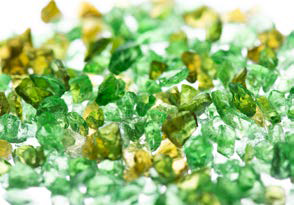
There are two types of AFM. AFMs (standard) and AFMng (new generation). Unlike traditional sand filters, which rely on finite natural resources and often exhibit limited performance, AFM® offers a holistic approach to filtration that maximizes efficiency while minimizing environmental impact. A good filter sand filter down to 20 micron. AFMng of the same grain size (0.8-1.4mm) filters down to one micron. With flocculation/coagulation, filtration to 0.1 micron can be reached and this is fine enough to mechanically remove bacteria from water. Through a meticulous engineering process, recycled glass is transformed into a high-performance filtration medium, capable of surpassing the filtration capabilities of conventional sand by orders of magnitude.


The Science Behind AFM®: Engineering Excellence
At the heart of AFM®’s efficacy lies a sophisticated activation process that imbues recycled brown and green glass with enhanced adsorption properties and an enlarged surface area. This process not only amplifies filtration efficiency but also imbues AFM® with unique bio-resistant properties, mitigating the formation of biofilm and prolonging filter lifespan. Through a three-step activation process, AFM® attains a larger surface area and enhanced adsorption capabilities, resulting in unparalleled filtration efficiency.
Moreover, AFM®’s ability to filter particles down to microscopic levels, including bacteria and organic contaminants. This fine-tuned precision surpasses traditional sand filters, enabling the mechanical removal of bacteria from water—a crucial aspect in various industries, including drinking water production and aquaculture. By combining cutting-edge technology with environmental conscientiousness, AFM® sets a new standard for sustainable filtration in the 21st century. Biofouling and channeling pose significant challenges in conventional filtration systems, leading to decreased efficiency and potential health hazards. AFM®’s bio-resistant surface, catalyzed by iron and chromium oxide, creates an inhospitable environment for bacterial attachment, mitigating the formation of biofilm and clumping. This resistance to fouling ensures consistent filtration performance and prolonged filter lifespan.
AFMs is negatively charged. This makes it ideal for removing positively charged particles such as metal oxides.AFM® finds applications across a spectrum of industries, including animal systems, swimming pools, industrial processes, and wastewater treatment. However, limitations exist, such as its unsuitability for certain oil industry applications due to hydrophobicity and the inability to remove dissolved heavy metals without additional treatment. Due to its bio-resistant surface, it is not suited for a combined mechanical / biological filtration.


while simultaneously increasing survival rates by more than 100%.
Jakob Surber, Technical Expert at Dryden Aqua explains, “The brown and green glass used for the production of AFM gets its colour from Iron-(brown) and chromium oxide (green). These metals act as a catalyst on the enlarged surface of AFM, catalyzing tiny amounts of water and oxygen into free radicals. (This happens inside every beer and wine bottle, albeit at a much smaller scale, as there is only a fraction of the surface available for the reaction.) This creates an unsuitable environment for bacteria to attach. As long as bacteria do not attach to a surface, they do not form biofilm. Biofilm in sand filters leady to clumping. These clumps block the filter, decreasing the effective filtration surface area. When a part of the filter bed is blocked channeling occurs. Through these channels, the water rushes at high speeds, without being filtered.”
“In the worst case scenario, the inside of clumps can become anoxic, leading to the production of hydrogen sulfide, or act as a breeding ground for pathogenic bacteria.”

Environmental Responsibility in Action
The production of AFM® exemplifies a commitment to environmental responsibility at every stage of the manufacturing process. Utilizing locally sourced recycled glass and renewable energy sources such as solar power, AFM® minimizes its ecological footprint while maximizing resource efficiency.
Furthermore, water conservation measures, including rainwater harvesting and filtration, ensure that every drop used in the production process is utilized to its fullest potential. By reimagining waste as a valuable resource and embracing sustainable practices, AFM® embodies the ethos of circular economy and sets a precedent for responsible manufacturing in the filtration industry.


Towards a Sustainable Future
As the world grapples with the challenges of climate change, resource scarcity, and environmental degradation, the importance of sustainable filtration solutions cannot be overstated. AFM is produced 100 percent from local, recycled glass. Sorted out white glass is sent back to bottle production. The fine particles caused by production processed into glass wool or foam glass for insulation and construction. The washing plant runs on rain water, collected from the roof the adjacent warehouses. To reuse the washing water as often as possible, it is filtered through AFM filters. The Factory runs on 100 percent solar energy produced by the over 7000m2 of solar panels installed on the roof, buffered by a total o 1500kwh battery capacity. The only part where we have not yet managed to phase out fossil resources yet, is the natural gas needed for the thermal activation process.
“We give a ten year guarantee on AFM. However, it has been running continuously for more than 15 years in waste-water systems, without losing efficiency. Sand, activated carbon, and zeolite all biofoul over time, and therefore have to be replaced or reactivated on a regular basis”, says Jakob. In conclusion, AFM® Activated Filter Media represents not just a technological innovation but a paradigm shift towards sustainable filtration practices. By upcycling post-consumer glass, enhancing filtration efficiency, and minimising environmental impact, AFM® sets a new standard for responsible water management.
Published in the May 2024 issue of International Aquafeed.