





























by John Buchanan, CEO; Debbie Plouffe, VP of Business Development; and Emma Crolla, Associate Marketing Director, The Centre for Aquaculture Technologies, USA
As the fastest-growing food production sector globally, aquaculture now supplies over half of the fish consumed worldwide. This growth is partly due to advancements in genotyping, genomics, and advanced breeding. These innovations are at the core of breeding programs that balance environmental stewardship with economic growth.
Breeding strategies in aquaculture have evolved significantly. They now utilise tools like genetic variation analysis, marker-assisted selection, and genomic selection to improve traits that enhance productivity and sustainability. Genome editing has the potential to revolutionise genetic improvement by enabling unprecedented precision and speed. It allows breeders to achieve goals in as short as one generation, which traditionally would take decades.
The Centre for Aquaculture Technologies (CAT), based in San Diego, is a leading provider of genetics solutions. The company is committed to delivering innovative and accessible technologies to the aquaculture industry.
Driving innovation
The company collaborates with breeders and producers worldwide to develop customised breeding programs for species such as Atlantic salmon, shrimp, and oysters. The company provides genotyping services for over 30 different aquatic species. Since its acquisition in 2019 by Cuna del Mar, a US investment company supporting innovative aquaculture methods, the company has expanded. It now operates two state-of-the-art research facilities for finfish and shrimp in San Diego.
“At CAT, we firmly believe genome editing presents the most feasible and sustainable pathway to meet increasing food requirements and contribute to the economic vitality of the sector. Our genome editing research in finfish is the most advanced, with encouraging early-stage work in shrimp and oysters,” explains John Buchanan, CEO.
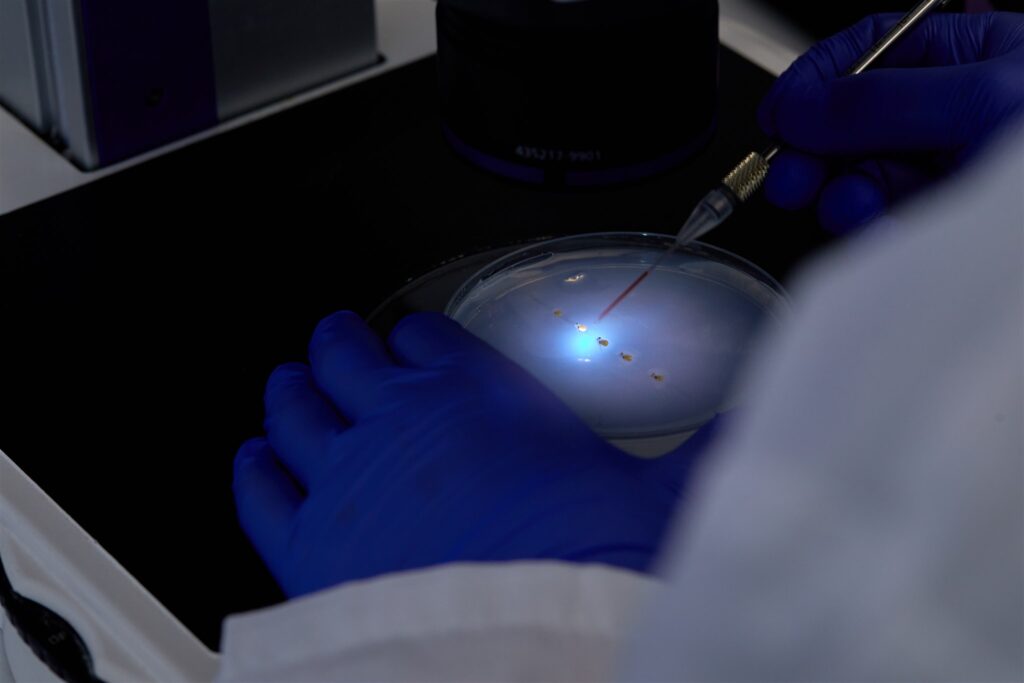
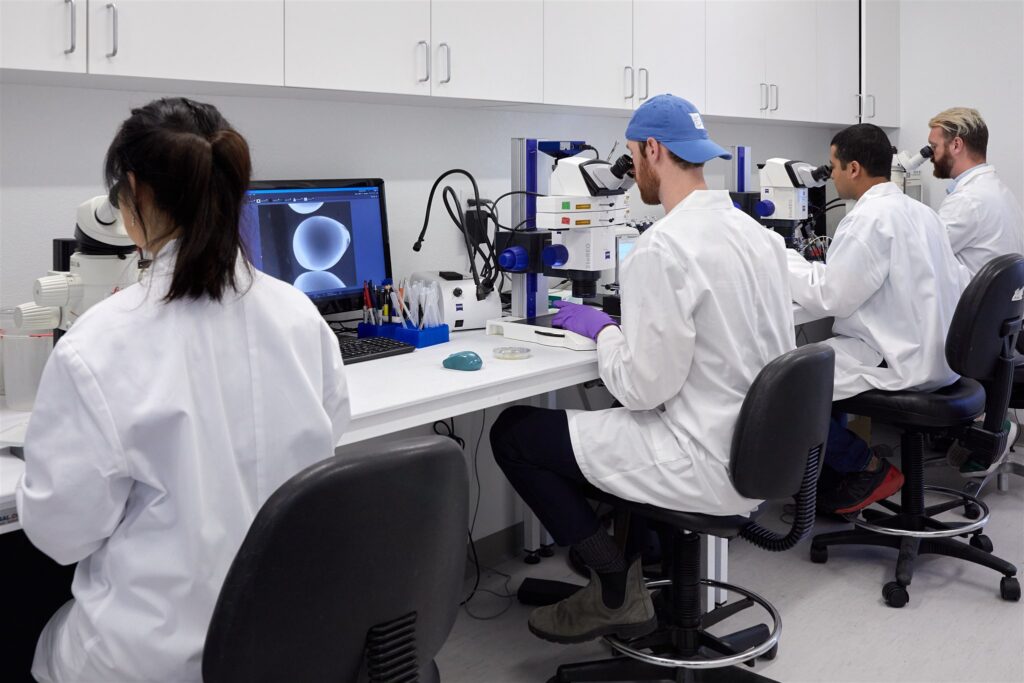
CAT’s facilities include a genome editing and germ cell transfer laboratory for commercial-scale research applications. The company also has a wet lab for data collection, in-house genotyping and sequencing capabilities, and a world-class recirculating aquaculture system (RAS) to support research and animal welfare. Bringing all these workspaces together has enhanced research efficiency.
Genome editing techniques
For decades, scientists have explored innovative genetic methods to transform aquaculture. A common question remains: how does genome editing differ from traditional breeding?
“Traditional breeding involves crossing organisms with desirable traits, relying on natural genetic variation and recombination. While effective, it can be less precise and can take many generations to achieve intended goals,” explains Buchanan.

Genome editing takes precision to a new level. Using tools like CRISPR-Cas9, scientists can directly create new genetic variation in specific genome locations without introducing new DNA. “This approach allows us to induce beneficial genetic changes with accuracy and speed, achieving results in one generation that would take decades with traditional selective breeding,” Buchanan adds.
Genome editing is already making an impact globally. In human medicine, it has been used to cure diseases caused by faulty genes. In agriculture, genome-edited pigs resistant to endemic viruses will soon transform pig farming. Aquaculture is also embracing the technology, with genome-edited tilapia deregulated in Argentina and Brazil.
Benefits of genome editing
Genome editing offers transformative benefits for farmers and the global industry. It enables targeted genetic improvements that enhance productivity, resilience, and sustainability in harmony with traditional selective breeding.
For farmers, these advancements translate to faster-growing stock, improved disease resistance, and better feed efficiency—ultimately reducing costs and increasing profitability. For the industry, genome editing drives innovation while supporting environmental stewardship.
“With a world-class genetics team and a focus on client success, CAT is positioned to bring these technologies to market and create impactful solutions. Moreover, the approach allows integration with health and nutrition initiatives, fostering a sustainable production system,” Buchanan notes.
Tilapia as a key research species
More than 25 aquaculture species have been successfully genome-edited. Tilapia is used as the key research species due to their short generation interval and robust nature.
“Our scientific team at CAT is pursuing three main areas of research,” says Buchanan. “The first focuses on developing sterility as a biocontainment solution. The second introduces genetic variations to enhance commercial performance. The final focus is on developing scalable tools for commercial application.”
CAT’s research has led to the commercialisation of Sterility+®, combining sterility with desirable traits for farmed environments. “We view sterility as a crucial prerequisite for commercialising genome edits in aquaculture,” adds Buchanan.
In their edited tilapia line, the company has achieved a 40 percent increase in growth rates, a 60 percent increase in fillet yield, and a 10 percent improvement in feed conversion efficiency—realised within one generation and with 100 percent sterility.
Sterility in aquaculture
Beyond improving performance, producing 100 percent sterile fish addresses significant challenges in aquaculture. Sterility alleviates regulatory concerns, safeguards biodiversity, and enhances productivity.
CAT continues to refine genome editing technologies with a focus on delivering benefits for the environment, consumers, and the industry. “We’ve developed strategies to create broodstock capable of producing only sterile offspring,” explains Buchanan.
Sterile fish prevent gene flow from farmed to wild populations, supporting a balanced ecosystem and improving animal welfare by reducing stress and aggression.
Scaling genome editing technologies
Bringing genome editing to a commercial scale requires precision and scalability. Tools like CRISPR (Clustered Regularly Interspaced Short Palindromic Repeats) must be precisely applied to deliver intended results. Successful integration demands creative thinking.
“In the past year, we’ve achieved milestones in scaling genome editing for aquaculture,” shares Buchanan. “We’ve demonstrated high-throughput editing in finfish, achieving over 90 percent editing efficiency across thousands of embryos daily.”
CAT’s advancements highlight the immense potential of genome editing. As the company prepares to embrace this new era of genetic innovation, the focus remains on sustainability, resilience, and unlocking opportunities for the industry.
“Yonathan Zohar, Professor and Chair, Department of Marine Biotechnology at UMBC, and I will discuss these topics at the Aquaculture 2025 conference in New Orleans,” concludes Buchanan.
Published in the February 2025 issue of International Aquafeed & Fish Farming Technology.