































by Emmanuel Pruvost, Sales Manager-EMEA (Europe, Middle East, and Africa), Kemin AquaScience™
Salmonids (trout and salmon) have a distinctive reddish-orange colouration of their flesh in the wild thanks to the presence of certain pigments ingested via the food chain. Astaxanthin is one of these pigments. Initially produced by phytoplankton, astaxanthin is ingested by zooplankton, which in turn is consumed by small fish and crustaceans, before finally being consumed by larger fish such as salmon. Salmonids cannot synthesise these pigments themselves.
The only solution available to the salmon industry is to incorporate astaxanthin into the feed in order to obtain this colouration, which is highly sought after by consumers and symbolises the quality of the product. There are several forms of astaxanthin available on the market (synthetic or natural). Certain raw materials that are naturally rich in the pigment can also be added to the feed (krill, shrimp meal and oil, etc.). This supplementation represents between 10 percent and 18 percent of the cost of the feed. This is far from negligible, given that in the end the retention of digested carotenoid could be on average 18 percent. It is therefore interesting to better understand what influences the bioavailability of astaxanthin and to see what solutions Kemin AquaScience™ can provide.
Astaxanthin: powerful antioxidant
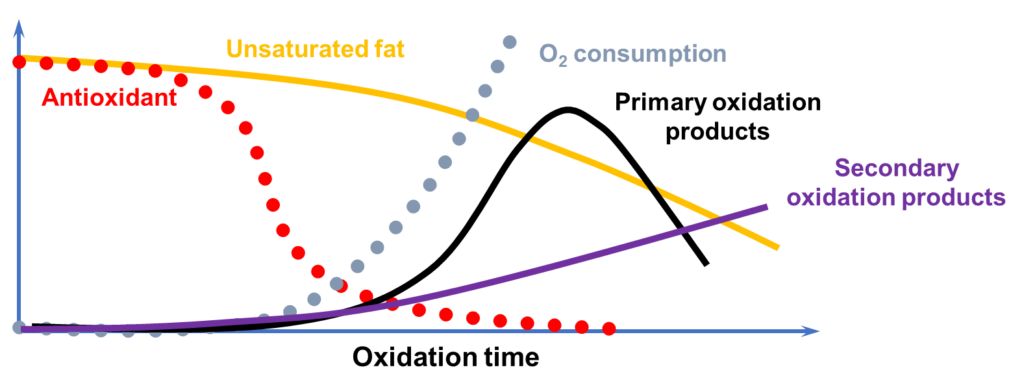
First of all, astaxanthin is a very powerful antioxidant. This apparently interesting characteristic is a constraint if the objective is the colouration of the flesh, because the role of an antioxidant is to sacrifice itself as soon as it detects a source of oxidation. If there is a risk of oxidation, astaxanthin will break down into secondary metabolites that have much less colouring power.
And we know that there are many risks and sources of oxidation in fish farming. We are talking here about oxidative stress, which has a direct influence on the concentration of astaxanthin in salmon muscle. The handling of fish for sea lice treatment, temperature variations and disease are just some of the reasons that influence oxidative stress.
As far as oxidation of feed and raw materials is concerned, there is no shortage of risks of damage to astaxanthin. This pigment is highly sensitive to light, heat and mechanical stress. Extrusion, which is widely used in feed production, has recognised advantages, but this method of pellet production is very aggressive towards astaxanthin and will lead to significant degradation and a reduction in its bioavailability. During the manufacture of the feed, insufficient or poorly adapted antioxidant protection and the use of raw materials showing signs of oxidation, even very slight (extrusion greatly exacerbates oxidation) is a major factor in the early degradation of astaxanthin. During storage, this degradation also continues.
Feed sustainability
One of the major trends in aquafeed in recent decades has been to replace fish oils with other sources, such as vegetable oils, out of concern for sustainability, the search for cheaper sources or supply difficulties. Studies have shown that this replacement has a direct impact on the efficiency of carotenoid deposition.
Blood meal is a raw material widely used in the production of fish feed, particularly for trout. Its highly digestible protein and affordable cost make it an attractive feed formulation. What’s more, this locally available co-product eliminates the need to import protein sources and reduces the feed’s carbon footprint. The only problem is that bloodmeal has a high iron content and therefore a pro-oxidant effect. The bloodmeal content must therefore be limited to between eight and 10 percent in the formulas, at the risk of not being able to control oxidation and of course of severely degrading the astaxanthin. The search for sustainability and the modification of ingredients in a formula is therefore an additional challenge.
Innovative solutions
Kemin AquaScience™, a division of Kemin Industries, produces global additive solutions for aquafeed and the protection of raw materials such as fish meal and fish oil. This company has an analytical laboratory dedicated to its customers and prospects: Customer Laboratory Services (CLS). This oratory can carry out numerous analyses, such as determining the oxidation state of feedstuffs or raw materials (Peroxide value (PV), Thiobarbituric acid index (TBA), Oxitest, antioxidant and astaxanthin recovery). This makes it possible to control the quality of the food and provide the most appropriate antioxidant protection (type of product and inclusion rate). This service provided by Kemin is therefore capable of measuring astaxanthin levels in feed at the various stages of feed production (before extrusion, after extrusion, after drying, in the bag, in the bag after storage). Losses of up to 80 percent of the initial astaxanthin intake have been observed. Our research and development teams have also developed a method for analysing astaxanthin in fish flesh. Thanks to these services, our customers know exactly where they are going, or at least how far they can go to protect astaxanthin.
Protecting fish feed
Oxivia™, the Kemin AquaScience™ range of antioxidants has been developed to protect fish feed against rancidity. More specifically, for the protection of astaxanthin in these feeds, our research and development teams have carried out an extensive screening of all the antioxidants avail on the market, testing them in order to select the most effective. Assemblies of these different antioxidant ingredients were also tested to find synergies. Extrusion tests were also carried out.
This product is the result of these screening and extrusion tests. It is particularly recommended for the protection of astaxanthin in trout and salmon feed or feed rich in blood meal. Our technical experts have also determined that Mix antioxidant protection, i.e. using a powdered antioxidant in the meal and then supplementing with a liquid form of antioxidant incorporated post-extrusion during coating with oils, is the best technically and economically viable way of protecting the feed against oxidation. The use of CLS makes it possible to refine the Mix: dry/liquid ratio.
Our antioxidant products are also formulated to take account of European Union regulations concerning the doses of synthetic antioxidants that must not be exceeded. As a reminder: 150 ppm of Butylated hydroxyanisole (BHA) and /or butylated hydroxytoluene (BHT) and 100 ppm of propyl gallate (bearing in mind that this propyl gallate level could be revised downwards. These standards mean that for some formulas, antioxidant protection with BHA, BHT and propyl gallate is insufficient. The use of natural antioxidants based on tocopherols and rosemary will be useful to partially or fully complete the protection against oxidation.
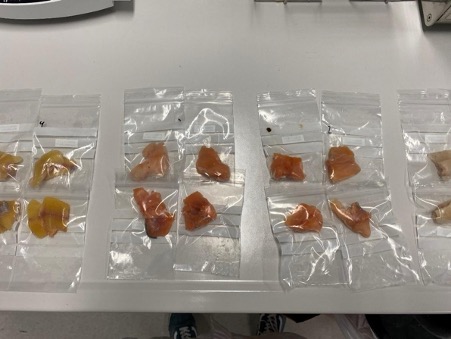
Tests were also carried out with our nutrient enhancer Lysoforte™ / Aquatria™. These lyso-phospholipid-based products, whose primary function is to improve the dietary efficiency of lipids and lipids-soluble nutrients and gut health, have been shown to increase the retention of Asx in the flesh of fish. A test on trout, using a feed enriched with 1kg/ml of the enhancer showed a 10 percent increase in astaxanthin retention in the flesh of the trout. Another test on trout conducted in University of Camerino Italy explained supplementation of Lysoforte™ in a one percent fish oil reduction diet resulted in significant improvement in intestine health. The studies thus indicates that both enhanced lipids efficiency and robust intestinal villi make contribution to a better absorption and retention of astaxanthin in fish flesh.

Solving the equation
The red-orange colour of salmonid flesh is a determining factor in the purchase price of fillets and the consumer’s attraction to this product. Fillet discolouration is an important issue for the salmon industry. The use of pigments such as astaxanthin makes it possible to remedy these constraints and maintain a high level of attractiveness. However, there is no shortage of challenges for this highly sensitive pigment during feed production, storage and the constant renewal of raw materials. The cost of astaxanthin in feed prices, and therefore in production costs, is far from negligible. How best to protect this pigment by increasing its retention rate in fillets without driving up feed costs is an equation imposed on all nutritionists. Kemin AquaScience™, with its associated solutions and services, is helping to solve this equation.
Published in the November 2024 issue of International Aquafeed.