






























by Marco Gioacchino Pistrin, CEO/Director, AquaOrganica, Italy

Every year, the Spanish Fish Farmer’s Association (APROMAR) releases an in-depth annual report, highlighting all production and market figures that are based on the input from the Spanish Ministry of Agriculture, Fisheries and Food’s (MAPA) statistical data, production data from Spanish fish farmers, fish exporters, feed producers, wholesalers and grocery chains, and processing companies. In addition to this, APROMAR makes use of detailed industry data from, most notably, the European Commission (EC), the Food Agriculture Organisation (FAO), the Federation of European Aquaculture Producers (FEAP), and other key local and international partners. It is important to note that in this report, and according to APROMAR’s observations, several production, market, and consumption data do not always correspond perfectly with MAPA and FAO data.
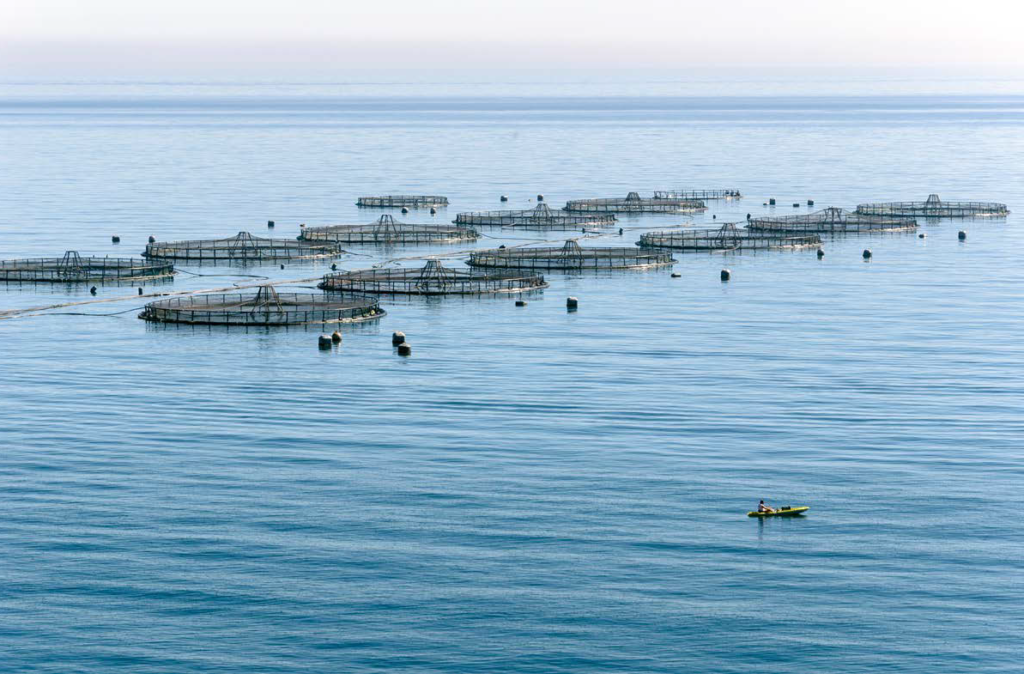
Having over 8000 km of coastline on both the Mediterranean Sea and the Atlantic Ocean and having exceptional freshwater resources, Spain boasts a diverse, robust, and increasingly sustainable aquaculture industry that is continually showing signs of growth and advancement. The north-western region of Galicia has, by far, the largest number of aquaculture facilities in the country, with more than 90 percent of all national production sites located either in the Atlantic Ocean or in the tidal zone along its 1,200 km coastline.
In the early 1960s, there were virtually no instances of inland or maritime fish production, save some very limited rainbow trout production. From about 1973, and throughout the 80s, Spain saw a significant transition to more contemporary aquaculture practices and began to encompass more marine finfish species, with a strong focus on mollusc production. Today, mussel, clam, and oyster farming account for over 80 percent of the total aquaculture production output for the nation, with 93.8 percent of all aquaculture production taking place in marine waters and 6.2 percent in freshwater. Comparing this to aquaculture in the European Union (EU 27), 73.8 percent of production is in marine waters and 26.2 percent is done in freshwater.
In recent years, Spain has seen a move towards a mass-consolidation of the many small to medium-sized aquaculture companies and this shift is paving the way towards more modern technologies and larger production figures, which now tend to focus more on efficiency and sustainability.
Market Overview and Production Figures
According to APROMAR 2023, the global aquaculture output for 2020 was 122.7 million tonnes and in 2021 it jumped to 126 million tonnes, with a final production value of €237.2 billion. This 2.7 percent, year-on-year, increase corresponds to a trend in growth and highlights the importance of global aquaculture as, for the ninth consecutive year, we see clear signs that aquaculture will continue to surpass all forms of extractive fishing.
Accumulatively, the EU (27) sits in 11th place in global rankings, producing 1.14 million tonnes of aquaculture products in 2021, with a 3.6 percent increase, year-on-year, valued at €3.96 billion. The main cultured species are finfish (70.2%) and molluscs (29.2%) with a value of €2.76 billion (increased by 10.7%, year-on-year) and €1.17 billion (increased by 25.5%, year-on-year), respectively. The production of other species, such as crustaceans, algae, and other aquatic invertebrates is limited. The top ten cultured species generated a staggering €3.53 billion, which is 89.2 percent of the total for the Block.
Mussel (Mytilus spp.) and rainbow trout (Oncorhynchus mykiss) aquaculture are by far the most prominent within the EU (27), producing 42,3379 tonnes and 19,3266 tonnes, respectively. 18.4 million tonnes of molluscs were produced globally in 2021. The EU (27) as a whole, contributed merely 3 percent to the global mollusc production figures and produced a total of 560,205 tonnes, valued at €1.18 billion. In 2021, the global rainbow trout production was 948,663 tonnes, with Europe producing 19 percent of the global total, valued at €665.5 million.
The Gilthead seabream (Sparus aurata) production was 103,130 tonnes, which is 8.9 percent more, year-on-year, valued at €537.1 million. 98,826 tonnes of Japanese oyster (Crassostrea gigas) were produced with a 6.1 percent year-on-year growth, with a value of €412.6 million. Quickly narrowing the gap from the figures above, European seabass (Dicentrarchus labrax) production was 96,647 tonnes, demonstrating a noteworthy leap of 16.7 percent, year-on-year, and valued at €554.5 million. All relevant industry players will certainly keep an eye on this for the future.

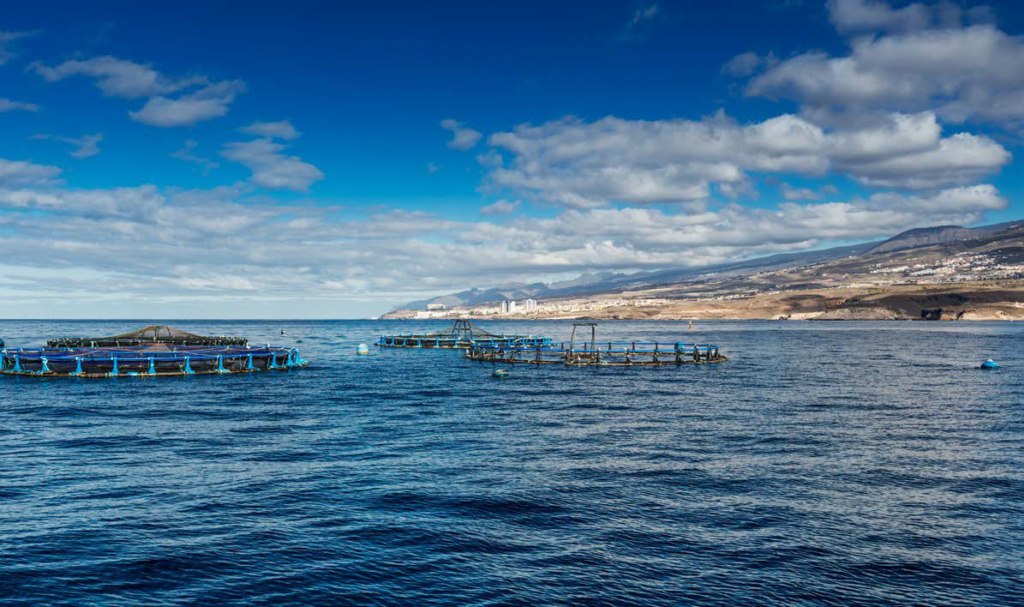
According to 2021 FAO data, Spain leads the ranks within the EU (27) for mollusc production, most of which being mussels (206,434 tonnes / €150.4 million), with France in second place, concentrating on oyster production (150,464 tonnes / €517.9 million), and Italy is in third position, focused on clam production (85,354 tonnes / € 256.1 million). Spain, France, and Italy, combined, produced 78.9 percent (44,2252 tonnes) of the EU (27) farmed molluscs.
In 2022, Mussel production increased and contributed 225,218 tonnes to the Spanish national total, with an estimated value of €159.3 million. Next, 23,622 tonnes of European seabass were produced and valued at €181.6 million, followed by 16,328 tonnes of Rainbow trout, with a value of €43.6 million, 10,877 tonnes of Atlantic Bluefin tuna, valued at €183.2 million, and then seabream at 8,932 tonnes and valued at €43.7 million.
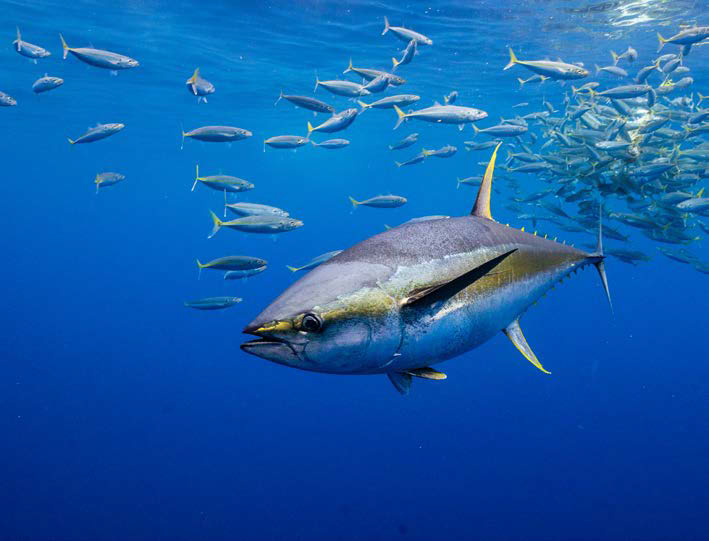
For 2022, APROMAR showed that Spanish marine finfish production peaked at 58,672 tonnes, which is an increase of 11.8 percent, year-on-year. This marked increase in production signals the start of a potential upward trend and had a total value estimated at €527.8 million. With European seabass and Atlantic Bluefin tuna (Thunnus thynnus) being the frontrunners in this change, combined, these two species demonstrated a notable growth of 36.3 percent growth in value, year-on-year.
According to the EUMOFA 2023 report, Iran is the current global leader for trout production for the past decade, producing 197.370 tonnes in 2020 and accounting for 20 percent of the total, followed by the EU (27), Turkey, Norway and Chile. France, Italy, and Denmark account for 54 percent of all the production for Block.
Rainbow trout production dominates the land-based farming sector in Spain and is typically produced in traditional raceways in the following regions: Andalusia, Aragón, Asturias, Castilla la Mancha, Castilla y León, Catalonia, Galicia, and La Rioja. Producing 16,328 tonnes, and valued at €43.6 million, Spain saw in 2022, a 4.1 percent increase in production concerning the previous year and in 2021 they produced another 4.8 percent, year-on-year.
The HORECA market demand has been strongly influencing the production of rainbow trout in recent years, with a significant trend towards large trout (>1.2kg), as compared to portion-sized trout (350g – 450g). This can be explained by the stagnation of the price for portion-sized trout and the diversification and expansion opportunities for larger fish in the HORECA sector.
In 2021, 29,9810 tonnes (-1.3 percent loss, year-on-year) of cultured European seabass was produced globally, satisfying 98.2 percent of the total farmed seabass market. Turkey is by far, the dominant player, producing 51.8 percent of the global total at 156,000 tonnes, with Greece next, in second place, at 17.9 percent with 54,000 tonnes. Egypt is third and produced 11.6 percent of the total at 35,000 tonnes, and in fourth place, Spain at 7.8 percent with 23,600 tonnes. These four nations alone, produce 89.1v of the global at 268,600 tonnes.
APROMAR states that, in the first place, the Region of Murcia produced 31% of the total Spanish seabass production in 2022 with 7,244 tonnes. In second place, Andalusia produced 6,020 tonnes, contributing 25 percent to the national total. Third place was Valencia which produced 22percent at 5,240 tonnes. And then the Canary Islands with 21 percent at 4,948 tonnes and Catalonia with a mere 1 percent at 170 tonnes, taking up fourth and fifth place, respectively.
In 2023, a 1.2 percent year-on-year growth in production numbers was expected to the tune of 23,910 tonnes and €184.6 million in value. In 2022, APROMAR also noted a 19.3 percent increase in price per kilogram, year-on-year. This boost primarily is a response stemming from global lock-down measures as markets were starting back up again.
FAO data shows that in 2022, global farmed Gilthead seabream production was 320,630 tonnes, representing 1.8 percent growth, year-on-year. In 2023, it was estimated that there would be a slight reduction in production at 31,5500 tonnes. Much like farmed seabass, Aquaculture produces 95.8 percent of the global supply. In Spain, farmed seabream produced 92.8 percent of the national supply. Gilthead seabream production is once again dominated by Turkey, occupying a vast majority of the market share (41.6 percent), and producing 13,3500 tonnes, in 2022. Next, we have Greece producing 22.7% of the total with 67,000 tonnes. Egypt produced 11.6 percent with 36,000 tonnes, Tunisia produced 16,000 tonnes for 5.0 percent of the market, and Spain had only a small piece of the market at 2.8 percent and produced 8932 tonnes.

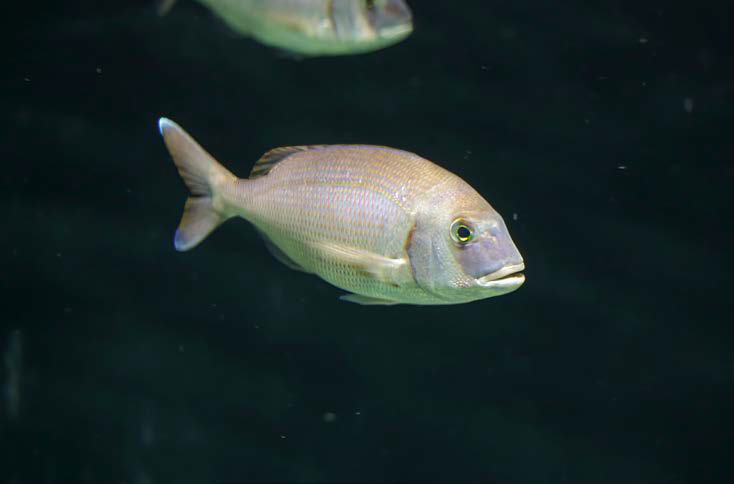
According to APROMAR 2023, the 2022 Seabream production in Spain was 8932 tonnes, valued at €43.7 million. This represents a -7.3 percent production collapse and an 8.6 percent price per kilogram jump, year-on-year, compared with 9632 tonnes, valued at €40.2 million. Relevant industry experts estimate that Spain will produce 11,000 tonnes by the end of 2023, which has yet to be fully analysed.
The Valencia region dominated 63 percent of the entire Spanish Gilthead seabream production in 2022, to the tune of 5620 tonnes. The Region of Murcia comes in at a far second, producing 15 percent and 1327 tonnes, Andalusia and the Canary Islands are virtually tied at 9 percent of production at around 800 tonnes each, followed by Catalonia, producing 4 percent of the market share and 380 tonnes.
Big Capital Projects
Futuna Blue España is a relatively new and interesting project, producing juvenile amberjack (Seriola dumerili), Senegalese sole, and bluefin tuna (Thunnus thynnus) in high-tech facilities. Futuna is currently operational and is the only viable amberjack fingerling producer in the Mediterranean. This company collaborates with research partners to aid in the further development of their sole and tuna production. More information can be found on their website (https://futunablue.com).
There is a notable project in the works called NEXT TUNA. This ambitious endeavour will boast some of the most cutting-edge production systems and technology and is planned to be built in Puerto Castellon, Spain, producing Atlantic Bluefin tuna. The Hatchery will be a land-based RAS facility, consisting of the following production units: broodstock, hatchery, first feeding, and juvenile. The grow-out is based on a floating design, with each tank acting like a production pod, sealed from the elements and having full independent control of cultivation parameters, filtration and disinfection. These pods can be moved around with great ease and make use of sustainable energy sources. There is a website (https://nexttuna.com).

Industry Growth and Trajectory
Globally, we can see continual growth, year-over-year, for aquaculture production value to the tune of 6.2 percent in the last 10 years and 4.7 percent, in the last 5 years. There are upward trends in both pricing and demand, which are being fueled by market recovery momentum after the global lockdown measures, post-2021. In 2021, the global production value was €237.2 billion and grew by 6.4 percent, year-on-year.
Aquaculture within the EU (27) has been comparatively sluggish to the global figures and trajectories. Since its inception, many of the growth objectives for aquaculture production that were proposed by the European Commission (EC) have been underutilised by the Member States and as such, performed abysmally. These programs, funding instruments, and technology platforms proposed by the Block have been recently revamped and in 2021, the EC published new strategic guidelines to encourage and support the improvement and growth of the aquaculture sector.
To meet EU (27) and national aquaculture production objectives for 2021-2027, Spain is projected to supply 34,5111 tonnes to the market just in 2024. It is envisaged that more finfish production will result, especially for marine species, which even includes emergent macroalga and crustacean farming. Experts also anticipate the stabilisation of mollusc production for 2021-2027 to hover around 230,000 tonnes annually.
According to APROMAR 2023, there are 5343 aquaculture facilities throughout the nation, which includes 5181 marine and 162 freshwater facilities. With all the aquaculture facilities found throughout Spain, 70.92 percent of production is based on platforms and long-lines in marine waters to produce molluscs, 17.9 percent are in sea-cages to produce finfish, and 9.51 percent are using tanks and raceways, both in sea and freshwater, to produce finfish or crustaceans. Less than 1 percent of all production takes place in the estuarine and intertidal zones to produce mainly molluscs and to a lesser extent, maritime flora and fauna. Recirculation Aquaculture Systems (RAS) are in last place, also at about 1 percent.
There is a lot of global interest in promoting the use of RAS technology due to so many benefits, but many are still wary of the heightened CAPEX and OPEX of such a modern facility. Experts expect to see tangible growth in not only the number of facilities in Spain in the coming years but also, anticipate a transition or adaptation to more land-based aquaculture, as RAS technology has been steadily improving yearly.

Although mussels represent the largest fraction of overall production in Spain, in terms of tonnage (76 percent), it is worth noting that the Atlantic Bluefin tuna production value is virtually the same, representing only 3.3 percent of the overall production. This is a key area for growth, and there are currently a handful of land and hybrid sea-based RAS facilities projects in the works, namely NEXT TUNA.
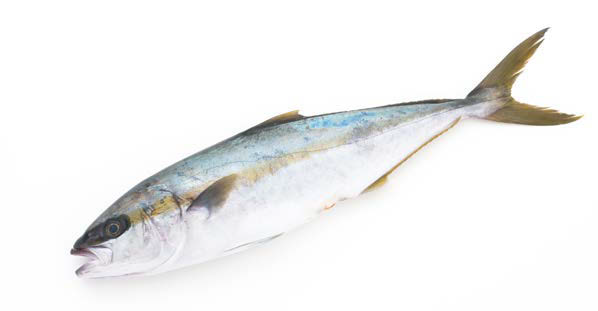
Due to the recent trajectory, Spanish market projections for 2024 and 2025 are seemingly optimistic, forecasting an increase in production and value, for finfish species such as European seabass, Gilthead seabream, Rainbow trout, and Atlantic Bluefin tuna. These finfish predictions are further supported, especially when we saw an increase of 11.8 percent, year-on-year for 2022 and from previous years as well. The Spanish aquaculture industry continues to grow and diversify by cultivating high-value, emerging species, such as meagre (Argyrosomus regius), Yellowtail amberjack and kingfish (Seriola spp.), Senegalese sole (Solea senegalensis), and turbot (Scophthalmus maximus & Psetta maxima). These opportunities can be attributed to the high per-capita consumption of seafood and the fact that Spain is an overall net importer of aquacultural products. Market development for new products and expansion for current products are also made possible by the existence of associations, funding platforms, and various government advocacy groups that afford relevant industry partners the ability to improve their visibility, efficiency, quality, production, and sustainability in the marketplace.
Published in the August 2024 issue of International Aquafeed.