

































by Dr Taofik Momoh, Research Associate, University of Plymouth, UK
The link between inflammation, intestinal health and whole-organism performance has been recognised across animal biology for more than a century. Early comparative physiologists noted that digestive tissues were not simply passive sites of nutrient absorption, but active immune interfaces that exert strong control over the performance of the whole organism.
This is even more evident in fish, which, in addition to the antigens from feed, are exposed to a continual influx of microbes from the surrounding water, making the fish intestine a major ecological and immunological frontier. Local inflammatory responses, once thought to be isolated events, are now known to influence systemic stress, metabolic efficiency, resilience and growth. In fish, as in mammals, maintaining a balanced inflammatory tone in the intestinal tract supports whole-system robustness.
Cost of chronic intestinal inflammation
Inflammation itself is not inherently bad. It is central to immune defence and tissue repair. For example, when tissues detect injury or irritants, they trigger an inflammatory cascade, leading to the release of cytokines which recruit phagocytic immune cells to the affected area and prevent pathogens from establishing. At the same time, inflammation increases blood flow, stimulates cell proliferation and promotes collagen deposition to rebuild damaged tissues and restore barrier function.
The challenge arises when inflammatory responses become excessive or persistent, shifting from a protective mechanism to a physiological burden where energy is diverted away from growth and normal metabolic functions towards immune regulation. Chronic inflammatory states in the fish intestine have been associated with poorer feed conversion, reduced growth rates, compromised barrier function and increased susceptibility to diseases.
Famers historically relied on the prophylactic use of antibiotics to manage this challenge, however, tighter legislations surrounding antibiotic use in aquaculture have seen the topic of nutritional strategies that can support intestinal resilience emerge as a priority for fish health.
Yeast-derived functional feed additives
Among the nutritional strategies in common use is the inclusion of FFAs (functional feed additives) in aquafeeds. FFAs are included in the diets of fish for their ability to target and influence specific physiological processes (e.g. immune signalling, barrier protection and microbiome modulation) rather than their nutritional value.
Among the most widely studied of these are brewers’ yeast-derived FFAs, which include a wide spectrum of products such as whole inactivated yeast, purified cell wall fractions (β-glucan and mannan oligosaccharides (MOS)), yeast cytosolic extracts rich in nucleotides and peptides and postbiotics and fermentation products. Each of these products protect fish intestinal health through distinct mechanistic actions.
For instance, yeast β-glucans, with their unique β-1,3-1,6-glucan linkages, interact with pattern recognition receptors (PRRs) on immune cells to support rapid innate immune response without chronic activation, MOS can bind some pathogens and prevent unfavourable colonisation of the microbiota, and cytosolic extracts contain nucleotides and cofactors important for cell proliferation and recovery, particularly during growth or intestinal stress. These products, unlike pharmaceuticals, do not suppress inflammation but guide it towards balance and enhanced immune resolution.
Evidence from a recent study
An eight-week study was conducted by our research group at the University of Plymouth to evaluate the efficacy of specific yeast-derived FFAs to mitigate intestinal inflammation. One group of Atlantic Salmon parr (ca. 24g) were fed diets containing 30 percent soybean meal (30-SBM) to induce intestinal inflammation.
Three other groups were fed the same diet containing 30 percent SBM but supplemented with either 0.02 percent purified β-glucan (30-SBM+PβG), one percent of brewers’ yeast cytosolic extract (30-SBM+YE1) or 2.5 percent of brewer’s yeast cytosolic extract (30-SBM+YE2.5). A fifth and final group was fed a diet without SBM as non-inflammatory control group (0-SBM). The diets were formulated to meet the known nutritional requirements of Atlantic Salmon parr.
The yeast FFAs used in the study include commercially available Leiber Beta-S as the β-glucan product and a soluble dried yeast extract product in development from Leiber GmbH. The aim of the experiment was to elucidate the ability of the different yeast extracts to ameliorate, through their different mechanistic actions, soybean meal induced enteritis (SBMIE) – a well described intestinal inflammatory condition in Atlantic Salmon.
Dietary yeast limits inflammatory damage
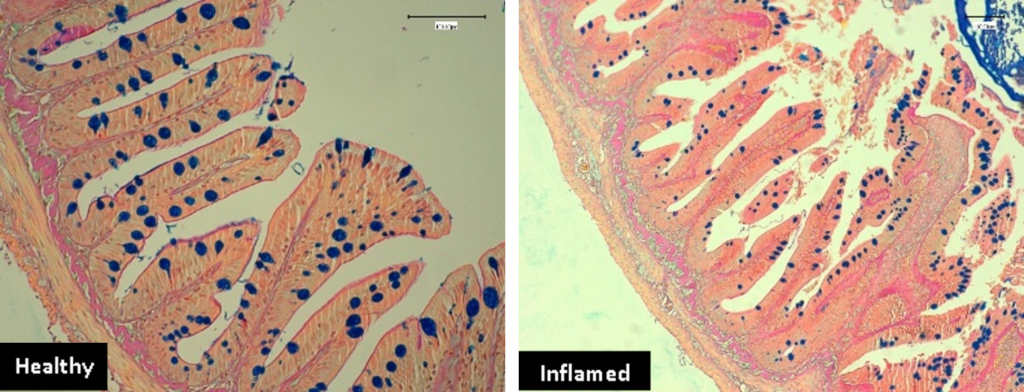
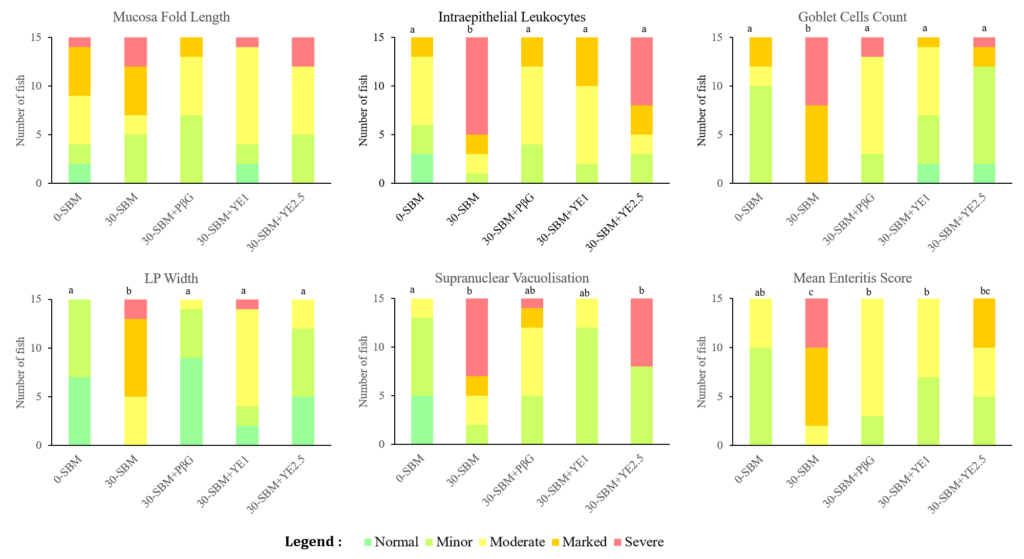
Histological examination revealed that fish fed the SBM-only diet displayed typical characteristics of SBMIE, including elevated intraepithelial leukocytes, widened lamina propria and a high goblet cell density (Figure 2). In contrast, fish receiving β-glucan or one percent yeast extract had significantly lower inflammation scores, approaching those seen in the non-inflammatory control group. These improvements were evident across multiple parameters, including mucosal appearance and infiltration of immune cells. Scanning electron microscopy provided further confirmation.
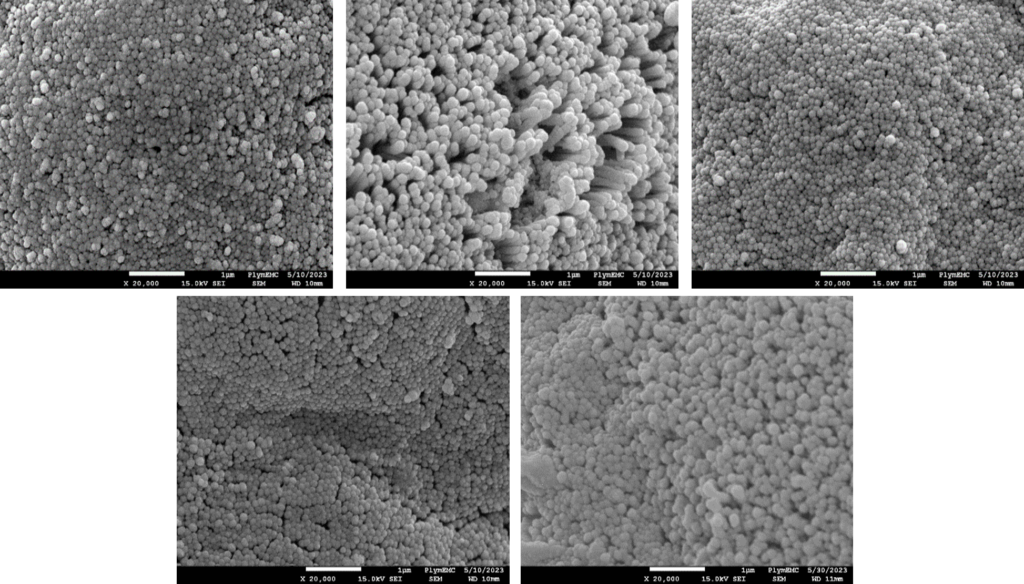
Fish fed the SBM-only diet displayed diffuse microvilli in the distal intestine, while those fed yeast-supplemented diets retained dense, organised microvillus structures, which indicates a healthy absorptive surface area (Figure 3). This preservation of structure in the yeast FFA treatments suggests that yeast components helped protect the epithelial surface from inflammatory damage caused by the high level of SBM.
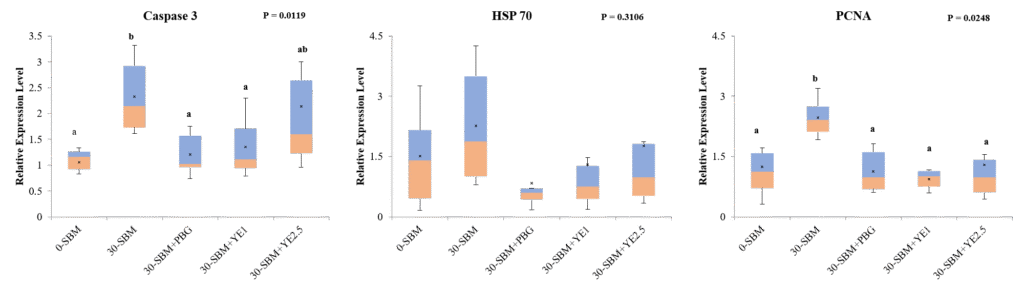
The study also analysed the intestinal expression of genes associated with apoptosis (casp3b; a marker of programmed cell death), proliferation (pcna; linked to cell division and repair) and physiological stress (hsp70; associated with cellular stress response). Fish fed the SBM-only diet showed significant upregulation of casp3b and pcna, reflecting increased tissue damage and compensatory repair (Figure 4).
Supplementation with both β-glucan and one percent yeast extract significantly reduced expression of these genes, bringing values in line with those of non-inflammatory control fed fish. The 2.5 percent yeast extract produced smaller improvements, suggesting dose dependency in the efficacy of the additive.
Implications for producers & farmers
A number of practical conclusions can be drawn from this research. Most importantly, intestinal inflammation can be nutritionally managed by yeast-derived FFAs. Both highly purified β-glucan and yeast extract at one percent, reduced intestinal inflammation, preserved microvilli and modulated cellular stress markers in this study. However, dosage matters. The study showed that increasing yeast extract dosage from one percent to 2.5 percent did not improve outcomes and in some cases, was less effective. This highlights a dose-response relationship that must be considered.
Beyond dietary challenges, intestinal inflammation affects salmon at multiple points during the production cycle, including seawater transfer, vaccination, pathogen infection, handling and environmental stress. Feed-based interventions such as yeast derived-FFAs that stabilise the immune response and protect the barrier could have value across this whole spectrum.
As aquaculture continues to evolve towards more sustainable fish health and management practices, intestinal inflammation remains a constraint on performance, welfare and resilience in Atlantic Salmon. Nutritional strategies that support intestinal health will become increasingly central and yeast FFAs offer a biologically grounded and practical approach to achieving this goal.