






























by Brett Glencross, Technical Director, IFFO, UK
The sustainability of marine ingredients in aquaculture feeds has been a focus of various measures (metrics), each coming with its own range of assumptions. These metrics are critical for assessing the role of marine ingredients, yet their limitations are significant. In a recently published review, [https://doi.org/10.1080/23308249.2024.2337426] the background behind each of these metrics, aspects of their origins, and each of their shortcomings were examined. For details on how each metric evolved and their calculation, readers are referred to that paper, rather than reiterating it here. A key failing of each metric was noted: none allowed for the assessment of ‘trade-offs’ and the consequences thereof—passing risks from one resource to another.
They all focused on marine ingredients, without recognising that replacing them with an alternative doesn’t necessarily improve sustainability, reduce risk, or even change the global impact on fisheries. Thus, the point of this article is to provide an overview of the merits of moving towards holistic assessments of all aquaculture feed ingredients. While marine ingredients play a crucial role in the industry, it is essential to consider all feed components and how their sustainability measures stack up against one another.
Metrics used for marine ingredients
Common metrics used for marine ingredients include the fish-in: fish-out ratio (FIFO), forage fish dependency ratio (FFDR), and more recently, the economic fish-in: fish-out ratio (eFIFO). While these metrics are recognisable as progressions from their predecessors, they are all myopic, focusing only on marine ingredients. They provide useful data but fail to address the complexity of ingredient sourcing, environmental impact, and the interactions between various feed components. Interestingly, in the 2020s, initiatives like the European Union Deforestation Regulations (EUDR) are recognising the risks of trade-offs and establishing systems to ensure alternatives don’t take us from the ‘frying-pan into the fire.’ However, this article aims to highlight the importance of sustainability and propose an alternative strategy to assess the sustainability of all ingredients, based on a life cycle assessment (LCA) approach.
Marine ingredients to holistic assessments
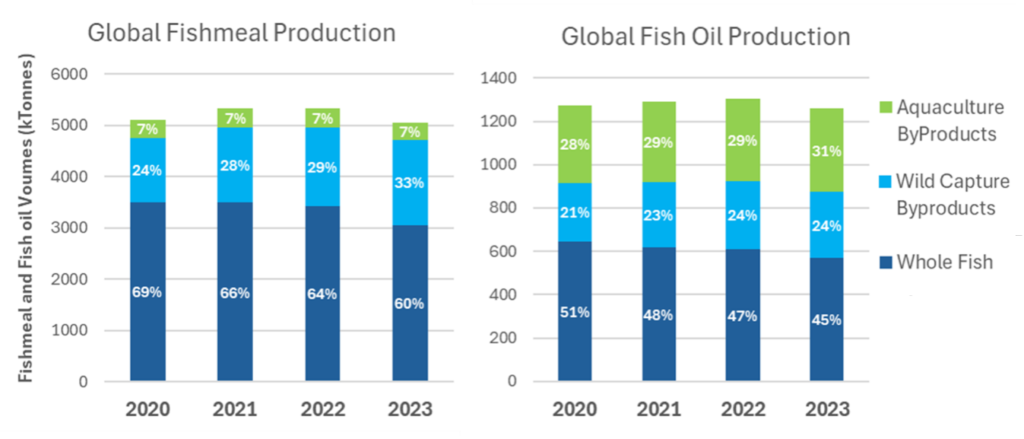
One criticism of marine ingredients has been their reliance on wild fisheries. However, in recent years, there has been a shift in resource use, with more by-products from fishery and aquaculture production for human consumption being used to produce fishmeal and fish oil (Figure 1). While many fisheries, particularly in the developing world, are under unsustainable pressure (FAO 2022), effective fisheries management has demonstrated the capacity to rebuild stocks while continuing to exploit them (Hilborn et al., 2020). Proper management of fish stocks is critical to ensuring the long-term viability of marine ingredients, and as such, sustainability practices must reflect a balance between resource extraction and regeneration.
In addition to focusing on resource management, the scope of sustainability efforts must also consider the broader environmental footprint of ingredient sourcing. Sustainability should not be evaluated in isolation but rather in the context of an entire production system, which includes assessing the environmental costs of substituting marine ingredients with terrestrial alternatives. There is growing recognition that trade-offs are inevitable when considering sustainability, and they must be carefully assessed to avoid unintended consequences.
Changing market demand
Marine ingredient production has not grown over the past thirty years. Faced with increasing demand from aquaculture, this has driven up the economic value of marine ingredients. The transition of these ingredients from feeds for poultry and pigs to aquaculture and pet and human food markets has made the use of resources more efficient.
However, the increased use of vegetable proteins has allowed for feed production at current quantities. The macro- and micronutrient density in marine ingredients still makes them important in certain feeds, though at a much lower inclusion percentage than two decades ago. These changes in market demand illustrate how shifts in resource use can impact pricing, availability, and sustainability decisions. Furthermore, as demand for marine ingredients continues to rise, more effort must be made to ensure the sustainability of their production.
The history of the use of fish oil in particular tells a slightly different story to that of fishmeal. Over time its value has grown to exceed that of fishmeal as it is increasingly being sought for direct human consumption (DHC), either as a nutraceutical omega-3 supplement or as a cooking oil. Although most of the fish oil is used by aquaculture, the growth in value is driven by the DHC and petfood markets, both of whom pay premium prices for the higher quality resources. The key driver here has been the discovery of the nutritional value to humans of the long-chain omega-3 fatty acids, which have long been touted for their health benefits. As consumer demand for omega-3 supplements grows, the competition for marine resources intensifies, driving up costs and potentially exacerbating sustainability challenges.
Managing fisheries and aquaculture
Concerns about the sustainability of marine ingredients began in the 1990s. Over time, sustainability metrics such as FIFO, FFDR, and eFIFO were developed, but none of these metrics address the impact of what replaces marine ingredients in feeds. A more holistic approach is needed, one that compares all feed ingredients based on shared sustainability criteria. Additionally, it’s important to focus on improving the efficiency of ingredient sourcing and reducing dependency on environmentally costly alternatives. The introduction of LCA as a tool for assessing sustainability has already started to facilitate a more integrated understanding of sustainability across the feed ingredient spectrum.
Holistic sustainability assessment
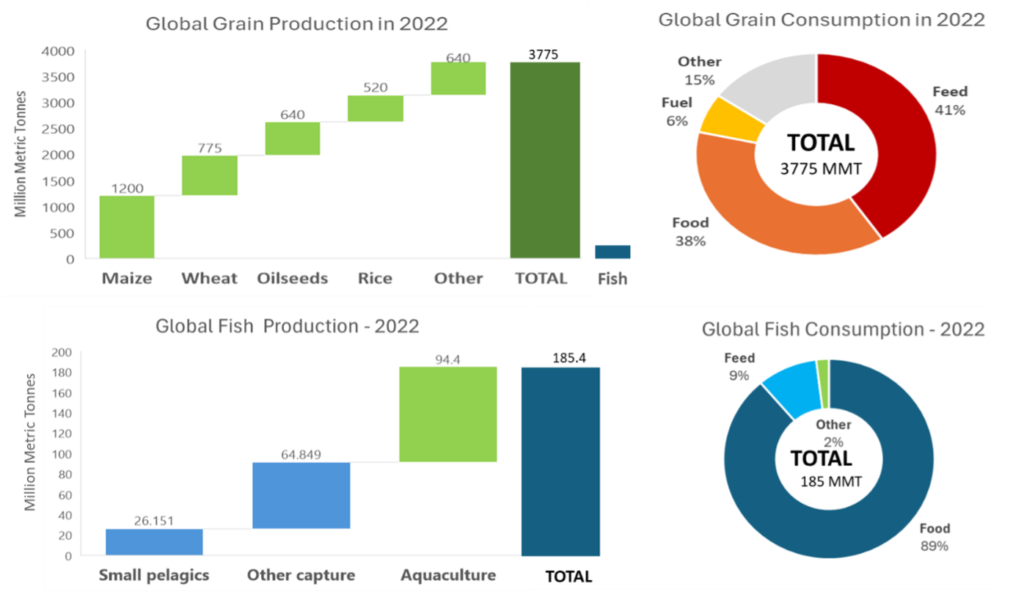
Originally, FIFO was developed to assess fish use in animal production, focusing on aquaculture. However, the use of fishmeal in pigs and poultry feeds has been greater than in aquaculture over the past sixty years. The FIFO metric does not account for the broader context of food production systems, where grain is used for animal feeds on a much larger scale than marine ingredients. Furthermore, since fishmeal and fish oil are co-products, metrics assessing one ingredient independently of the other are illogical. Yields for fishmeal and fish oil differ depending on the species being processed and vary year to year due to environmental conditions and fish maturity. The more we can understand the relationship between these co-products, the more effectively we can create metrics that measure sustainability across the entire production system.
Life Cycle Assessment for sustainability comparison
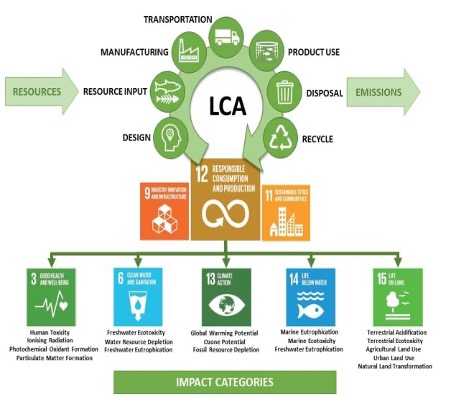
The marine ingredients sector is well aware of the path to improving sustainability. Metrics like FIFO, FFDR, and eFIFO have improved over time, but none consider the impact of replacing marine ingredients with other resources. Life cycle assessment (LCA) offers a more robust framework for comparing the sustainability of all feed ingredients. LCA evaluates environmental impacts throughout value chains, from raw material extraction to consumption and waste disposal. It considers a wide range of impact categories, including biodiversity loss, carbon emissions, and resource use, with categories that align with the United Nations Sustainable Development Goals (SDGs). As LCA becomes more widely applied, it will enhance our ability to understand the full scope of sustainability impacts and make informed decisions about feed ingredient sourcing.
Broader context of feed sustainability
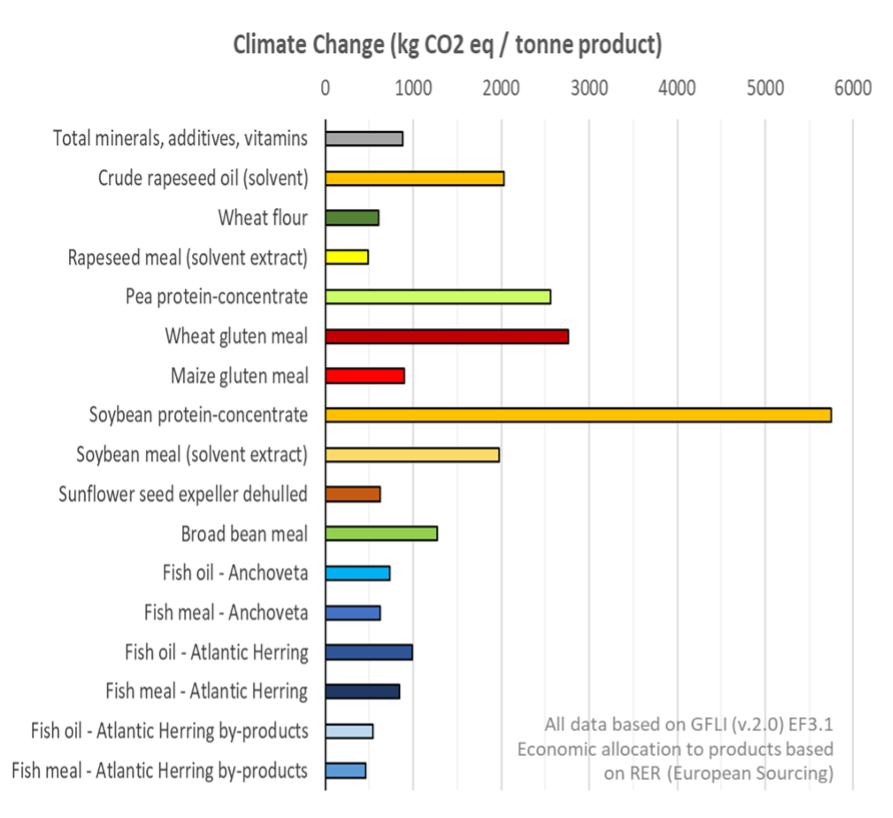
LCA reveals that all ingredients, including agricultural commodities, have sustainability impacts, such as deforestation, biodiversity loss, and carbon emissions. Agricultural cropping systems are often linked to these environmental issues, and it’s clear that no cropping system is insulated from such concerns. Comparing the sustainability footprint of ingredients used in European salmon feeds highlights the environmental impacts associated with different feed sources. As LCA methodology advances, we will gain deeper insights into the trade-offs between using marine and terrestrial ingredients, allowing for better decision-making that reduces environmental risks.
Sustainability is key
Seafood plays a vital role in feeding the world’s growing population, but it must be managed sustainably. Resources from seafood provide essential nutrition, whether directly consumed or used in animal feeds. When considered within the context of global food security, marine ingredients enhance the availability of seafood and contribute to human nutrition. To ensure aquaculture feeds develop sustainably, it is crucial to assess the broader environmental impacts of all feed ingredients, not just in isolation. Life cycle assessment is the most robust tool for comparing the sustainability of ingredients and should be widely adopted across the feed ingredient sector.
Published in the March 2025 issue of International Aquafeed & Fish Farming Technology