































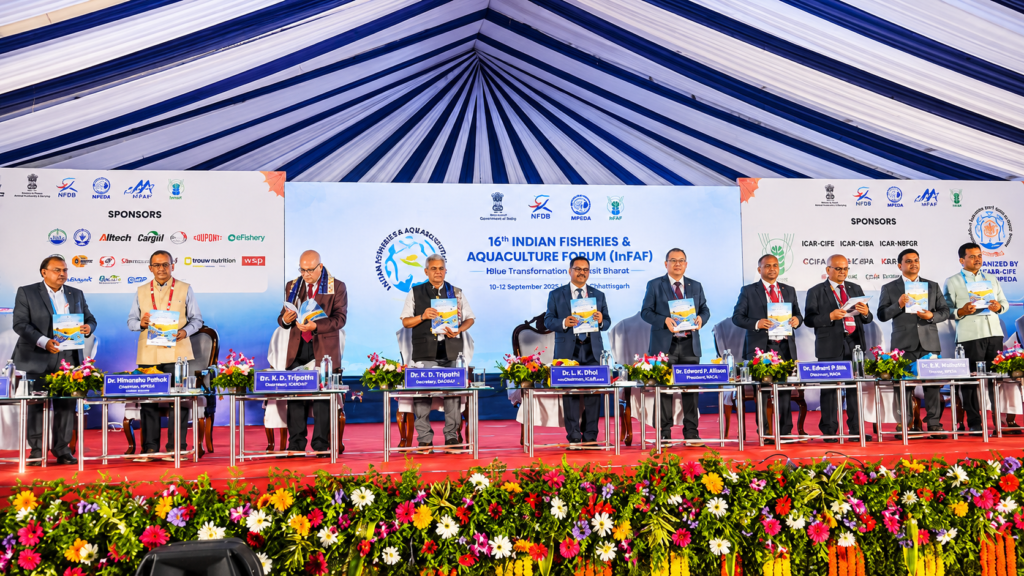
The 14th Indian Fisheries and Aquaculture Forum (14IFAF) opened on 18 November 2026 at the ICAR-Central Institute of Freshwater Aquaculture (ICAR-CIFA) in Kausalyaganga, near Bhubaneswar in Odisha. It runs until 20 November 2026 and has drawn more than 1000 delegates from India and six other countries.
The meeting is held under the theme ‘Transforming Aquaculture and Fisheries: Bridging Science and Society’. The programme also covers aquatic animal health, breeding technologies, genetic improvement, precision aquaculture (data-led farm management), aquatic ecosystem conservation and sustainable fisheries management.
Eduardo Leano, director general of the Bangkok-based Network of Aquaculture Centres in Asia-Pacific (NACA), opened the event. He urged faster innovation and technology uptake across the sector.
J.K. Jena, Deputy Director General (Fisheries Science) at the Indian Council of Agricultural Research (ICAR), called for greater investment in frontier research and stronger value chains. B.K. Behera, Chief Executive of the National Fisheries Development Board, pointed to fisheries cooperatives as a route to better livelihoods for fishers. C. Vasudevappa, former vice-chancellor of NIFTEM in Kundli, Haryana, stressed fish quality and consumer acceptance.
P.K. Sahoo, ICAR-CIFA Director and conference convener, said closer links between researchers, industry and farmers, backed by international cooperation, are needed to turn research results into practical farm solutions. He said delegates include researchers, academics, entrepreneurs and farmers, alongside policymakers and industry representatives.
An exhibition involving 20 agencies runs alongside the sessions, showing technologies, products and services for fisheries and aquaculture. It gives industry, researchers and farmers a place to meet and explore partnerships. The opening ceremony also featured the release of scientific publications and the presentation of Fellow Awards from the Association of Aquaculturists to eminent fisheries scientists.
The forum is jointly organised by the Asian Fisheries Society, Indian Branch (AFSIB), ICAR-CIFA, the Government of India’s Department of Fisheries, the National Fisheries Development Board, Odisha’s Fisheries and Animal Resources Development Department and the Association of Aquaculturists.
Genome editing has particular local weight. ICAR-CIFA is building a bio-secured genome-editing research facility on the same campus, with a budget of INR 5 crore (INR 50 million) and work under way on rohu and catla, two major Indian carp species. Completion was due in November 2026, according to some industry sources.
“Genome editing offers an opportunity to address some of the major challenges in freshwater aquaculture, including growth, disease resistance and better edible flesh yield,” Sahoo said when the project was announced.