




























A new study has shed light on the chemical substances released by Atlantic salmon that attract sea lice, advancing the understanding of this host-parasite interaction. Researchers have identified that the salmon secrete specific chemicals, known as kairomones, which help sea lice locate their host.
The study is part of the international CrispResist project, led by Nicholas Robinson from Nofima, involving scientists from Norway, the UK, USA, Canada, Sweden, and Australia. The project aims to understand why some species of salmon are more resistant to sea lice and use this knowledge to improve the resistance of Atlantic salmon in aquaculture.
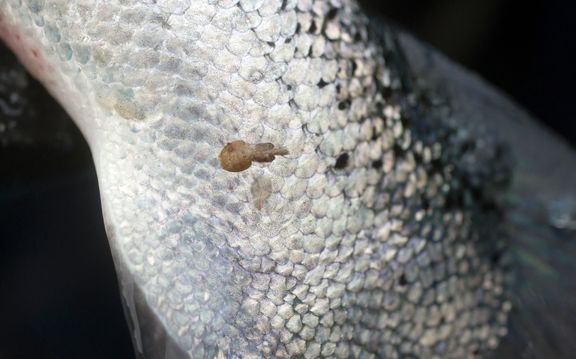
Researchers found that when sea lice are in their free-swimming larval stage, they are drawn to water conditioned with Atlantic salmon. This confirms that chemical signals play a crucial role in the lice’s behaviour. In addition, the study revealed that Atlantic salmon may also produce compounds that repel lice, although the attraction is stronger than the deterrence.
Behavioural tests showed that salmon with lower resistance to sea lice released mucus that stimulated lice activity more than mucus from more resistant salmon families. These findings could help pinpoint genetic and chemical factors that influence sea lice resistance, particularly as Pacific salmon species are known to exhibit natural resistance to these parasites.
The research also suggests that salmon produce these semiochemicals in various tissues, primarily the skin, providing a potential avenue for further investigation. The researchers plan to continue exploring these compounds and develop molecular tests to better understand the complex communication between sea lice and their hosts. The CrispResist project, funded by the Norwegian Seafood Research Fund, is a collaboration between multiple research institutions and industry partners, including Rothamsted Research (UK), the University of Gothenburg (Sweden), Bigelow Laboratory of Ocean Science (USA), and Nofima (Norway).