






























by Vangelis Kolios, Business Development Executive, PT Aqua, Greece
Marine aquaculture continues to expand across the Mediterranean and the Arabian Gulf, driven by the demand for high-quality fry and the diversification of cultured species.
Hatcheries today face a dual challenge — maintaining stable production of traditional species such as Seabream (Sparus aurata) and Seabass (Dicentrarchus labrax), while developing robust protocols for new regional candidates such as Sobaity Bream (Sparidentex hasta), Pompano (Trachinotus blochii) and Greater Amberjack (Seriola dumerili).
These shifts demand a new level of precision in hatchery nutrition. Success no longer depends only on live-feed availability, but on how efficiently live and formulated diets work together to sustain larvae through the most critical developmental stages. In this evolving landscape, the combination of Chlorella SV-12, a microalgal diet for rotifer culture and greenwater applications, and Otohime, a precision-engineered larval feed, has delivered reliable results across different hatchery environments.

From Mediterranean to Red Sea hatcheries
Hatchery systems across southern Europe and the Middle East share a common goal: producing strong, uniform fry with high survival rates and predictable growth. Yet the rearing conditions differ significantly.
In the Mediterranean, most hatcheries operate batch culture systems, maintaining high rotifer densities and relying heavily on microalgae for stable water quality. In contrast, hatcheries in the Gulf region often face extreme temperature and salinity fluctuations, requiring robust live-feed and formulated diets that can perform under more demanding environmental conditions.
Species behaviour also varies. Seabream larvae are sensitive to nutritional imbalances, while Sobaity and Amberjack exhibit high metabolic activity and greater aggression during feeding, making them prone to cannibalism if feed uniformity is poor. These realities underline why feed quality, particle consistency and water stability are central to hatchery performance — and why choosing the right nutritional combination makes a difference.


Foundation for healthy rotifers and greenwater
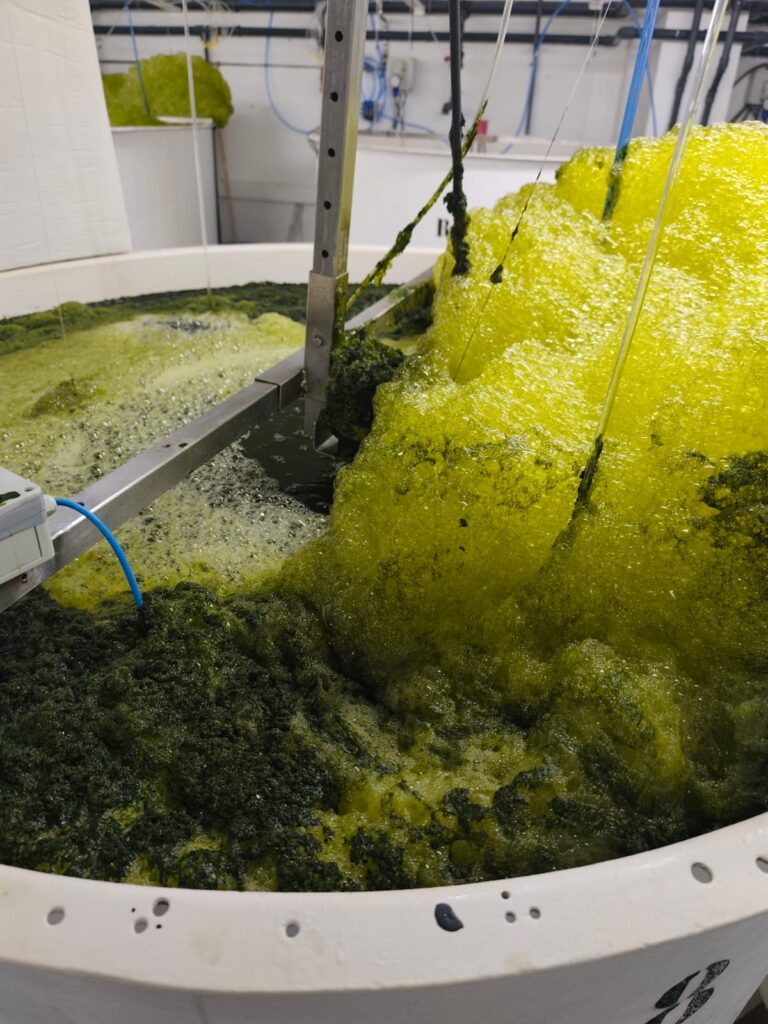
At the base of every successful larval protocol lies healthy live feed, and that begins with microalgae. Chlorella SV-12, developed by Chlorella Industries in Japan and distributed by PT Aqua, has become known for its stability and nutritional reliability in rotifer production systems.
Unlike conventional algal pastes, SV-12 maintains intact cell structures and uniform particle size, ensuring consistent rotifer ingestion and high population growth rates. It contains a balanced profile of essential fatty acids, including DHA, that supports the nutritional enrichment of rotifers while sustaining high densities with minimal culture collapse.
In addition to its role as a rotifer feed, SV-12 also performs well as a greenwater additive. Its optical density and slow sedimentation rate create a natural feeding environment for fish larvae, promoting visual feeding behaviour and reducing stress. Many hatcheries report improved swim bladder inflation and more uniform larval growth when using SV-12 in greenwater systems.
In warmer regions such as Saudi Arabia and the UAE, the product has also demonstrated resilience under high-temperature culture conditions, maintaining good suspension and low fouling rates — key features for operations running intensive production cycles.


Precision-engineered diet for larval transition
Transitioning from live feed to formulated diets remains one of the most critical — and delicate — phases in hatchery production. Otohime, a micro-encapsulated larval diet produced in Japan, was designed to address this challenge.
Each particle is manufactured under strict size control, from A1 (75–150µm) to C2 (840–1410µm), ensuring a smooth progression through developmental stages. The granules are semi-buoyant, mimicking the behaviour of live prey, while the unique coating technology prevents nutrient leaching and allows gradual sinking in the water column — keeping the feed available to larvae for longer without deteriorating water quality.
The nutritional formulation provides balanced levels of DHA, EPA, phospholipids and digestible protein. In practice, Otohime supports uniform growth, reduces cannibalism in aggressive species like Amberjack and Sobaity, and promotes earlier weaning from live feed. Many hatcheries consistently report stronger larvae with improved survival and less variability at transfer to the nursery.
Nutritional synergy
While each product delivers proven benefits on its own, the greatest impact often comes when they are used together as part of an integrated hatchery feeding strategy.
Chlorella SV-12 creates a stable and nutritionally rich environment — both by feeding the live feed (rotifers) and by improving the physical quality of the rearing water. This ‘greenwater effect’ softens light intensity, enhances larvae feeding response and buffers sudden chemical changes. Within this environment, Otohime acts as the precision component, delivering the concentrated nutrition needed to push larvae through rapid developmental phases.
Hatcheries working with both SV-12 and Otohime have reported smoother transitions from live feed to formulated diets, with reduced stress and higher swim bladder inflation success. The combination also minimises growth gaps between individuals, a key factor for maintaining batch uniformity and reducing grading frequency.
Used together, they form an integrated nutritional approach — from microalgae to rotifers and finally to the larvae — ensuring that each step in the food chain supports the next.
Adapting to regional needs and hatchery models
Flexibility is crucial for hatcheries operating under different climatic and management conditions. In Mediterranean facilities, batch culture systems remain the norm, where SV-12 provides a steady supply of microalgae and Otohime is introduced in small, frequent feedings to match larval behaviour.
In contrast, hatcheries in the Gulf region are increasingly adopting semi-continuous systems to optimise labour and reduce downtime between cycles. Here, both Chlorella SV-12 and Otohime have shown adaptability. SV-12’s stability and digestibility allow operators to maintain healthy rotifer populations even under fluctuating environmental parameters, while Otohime’s clean profile supports water quality in recirculating systems.
Species-specific adjustments are also possible. In Sobaity Bream, for instance, a longer co-feeding phase between live feed and Otohime has proven beneficial, while Pompano and Amberjack — being fast feeders — perform better with higher early Otohime inclusion rates.
Across all these systems, the goal remains the same: predictable, high-quality fry output through consistent inputs and precise feeding control.

Towards a new standard of hatchery efficiency
Consistency and predictability have become the most valuable currencies in hatchery management. The combination of Chlorella SV-12 and Otohime allows hatchery operators to minimise biological variability and reduce dependency on unstable live-algae supplies.
Standardised and ready to use inputs like these eliminate the need for in-house microalgae production and complex live-feed enrichment processes. This reduces both labour and biosecurity risks, while providing measurable improvements in larval quality.
Economically, hatcheries find that while the initial cost per kilogram of premium products may be higher, the overall production cost per viable fry often decreases — thanks to higher survival, reduced downtime and improved fry quality.
In regions like Saudi Arabia, where new government-backed hatcheries are setting production standards for the private sector, these efficiencies are vital. They not only ensure better fry for grow-out farms but also strengthen the technical foundations of a rapidly growing aquaculture sector.
Building regional capacity through collaboration
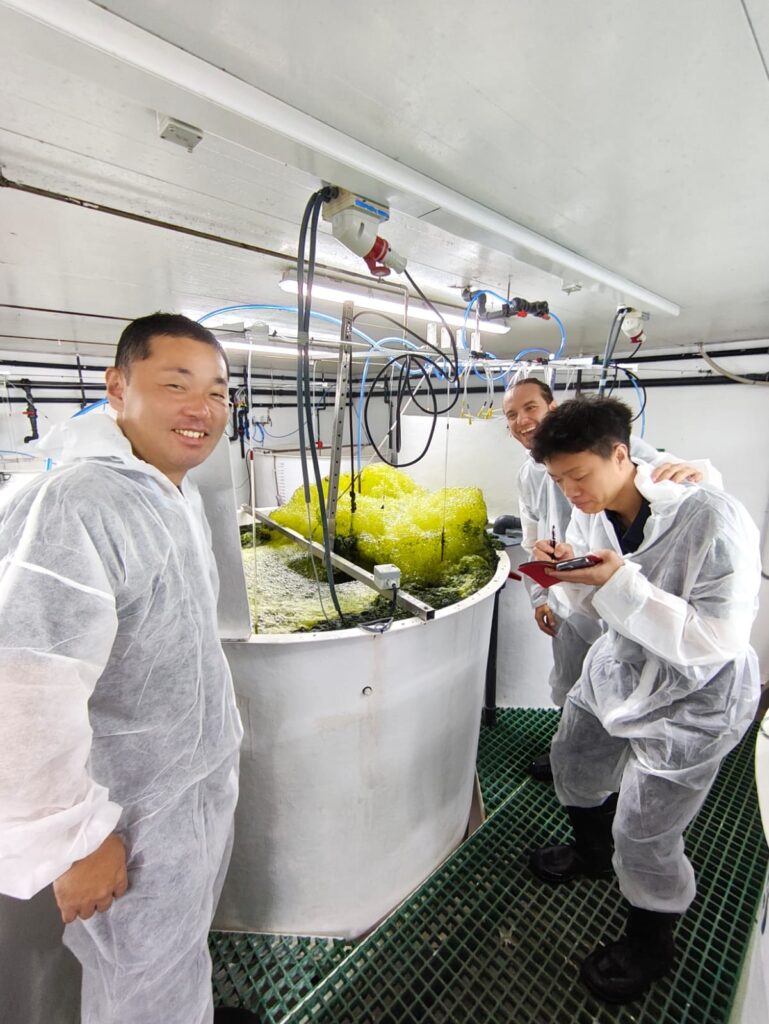
Behind the technical success of these products lies a network of partnerships and collaboration. Regular workshops and on-site visits serve as platforms for sharing experience between hatchery technicians, nutritionists and managers. The emphasis should be on real-world performance, feedback and continuous improvement.
Regional collaborations not only help optimise the use of Otohime and Chlorella SV-12 but also contributes to building a broader base of technical knowledge that supports the entire aquaculture community.
Building resilience through nutrition
The success of marine hatcheries in both the Mediterranean and the Gulf increasingly depends on precision — in nutrition, water quality and management. As production expands to include more species such as Sobaity Bream, Pompano and Amberjack, reliable feed systems that can adapt to different rearing conditions become essential.
Products like Chlorella SV-12 and Otohime stand out not only for their technical quality but for their proven field performance across different regions. Together, they represent an integrated nutritional approach that supports every stage of larval development — from microalgae and live feed to dry feed transition.
As aquaculture continues to evolve, products that combine innovation with practical reliability will define the next generation of hatchery success. The synergy between SV-12 and Otohime reflects exactly that: a bridge between science and practice, capable of supporting a sustainable, efficient and resilient future for marine fish hatcheries.