





























by Martin Winkel Lilleoere, Head of Fish Tech, Danish Export Association, Denmark
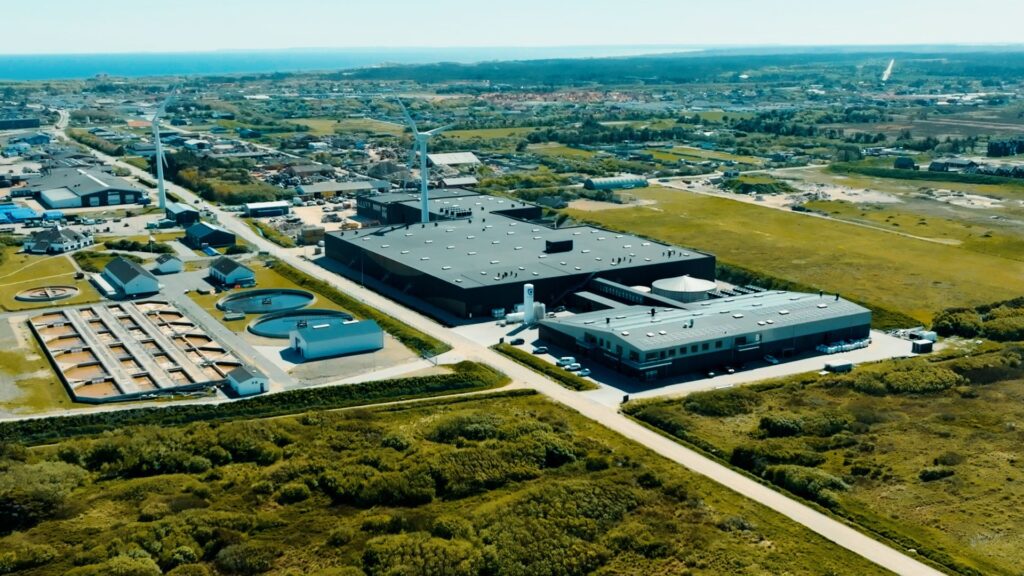
Denmark has developed a strong international position as a supplier of aquaculture technology and system design. Driven by strict environmental regulation and a focus on resource efficiency, the Danish sector has become a testing ground for innovations in recirculating aquaculture systems, water treatment and digital production management. This article explores recent technological developments and the regulatory framework shaping the country’s aquaculture industry.
Denmark has developed a strong international reputation as a technology-driven aquaculture nation. While the country’s total aquaculture production volume is relatively modest compared with major producing nations, Denmark has become an important hub for technological innovation, system design and equipment supply to the global aquaculture industry. This position is closely linked to decades of collaboration between fish farmers, engineering companies, feed producers and research institutions.
A defining characteristic of the Danish aquaculture sector is its focus on resource efficiency and environmental performance. Strict environmental regulations and limited availability of suitable farming sites have encouraged the development of advanced production technologies that allow fish to be farmed with reduced water consumption, lower nutrient discharge and improved operational control.
Over the past decade, technological developments within recirculating aquaculture systems (RAS), water treatment, digital monitoring and resource utilisation have played a central role in shaping the sector. These innovations are not only applied within Danish fish farms but are increasingly exported and implemented internationally.

Recirculating aquaculture systems and water treatment technologies
RAS represent one of the most significant technological areas in which Denmark has established a strong international position. Over several decades, Danish engineers and researchers have contributed to the development of land-based fish production systems capable of reusing a very high proportion of water while maintaining stable environmental conditions for fish.
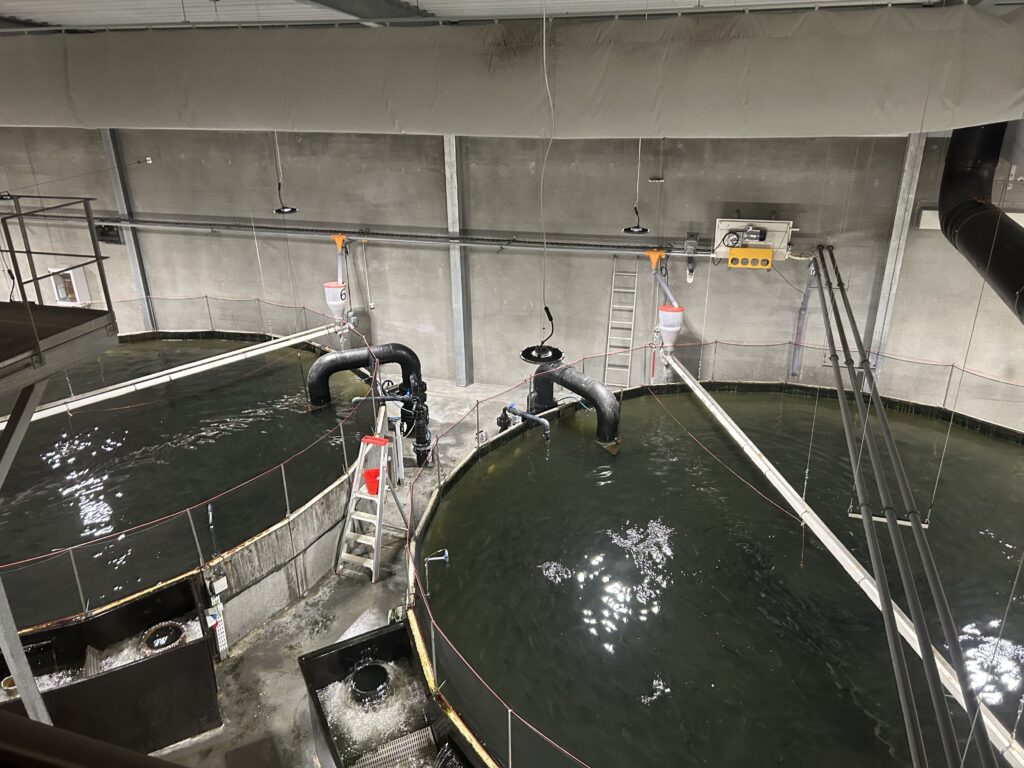
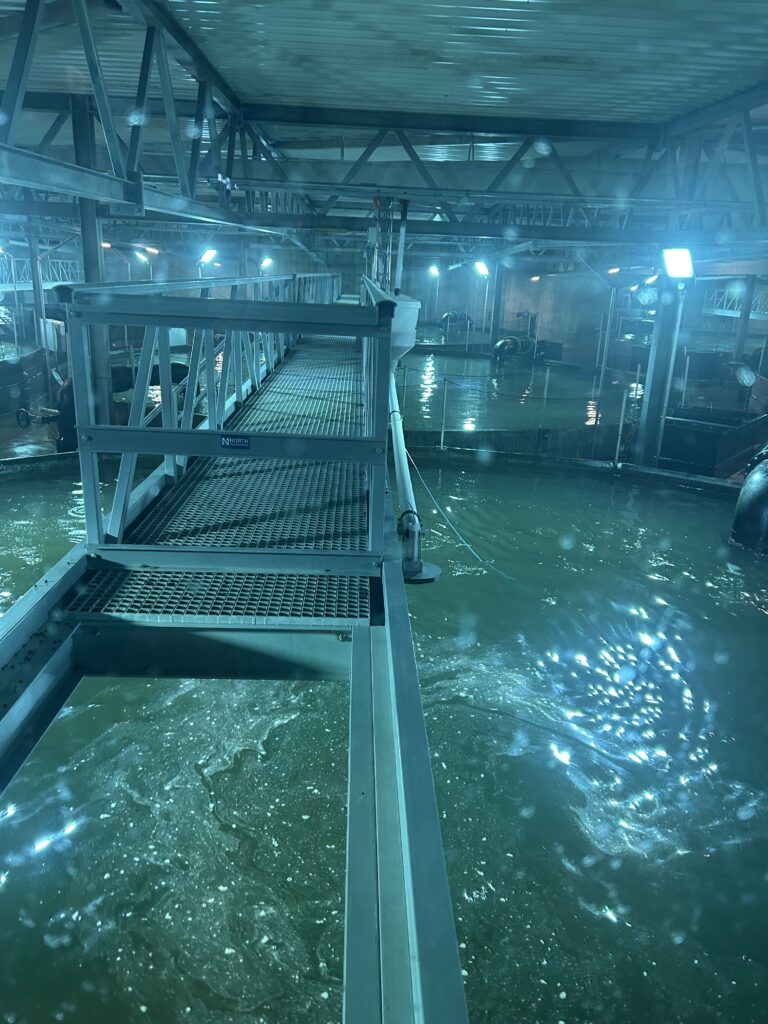
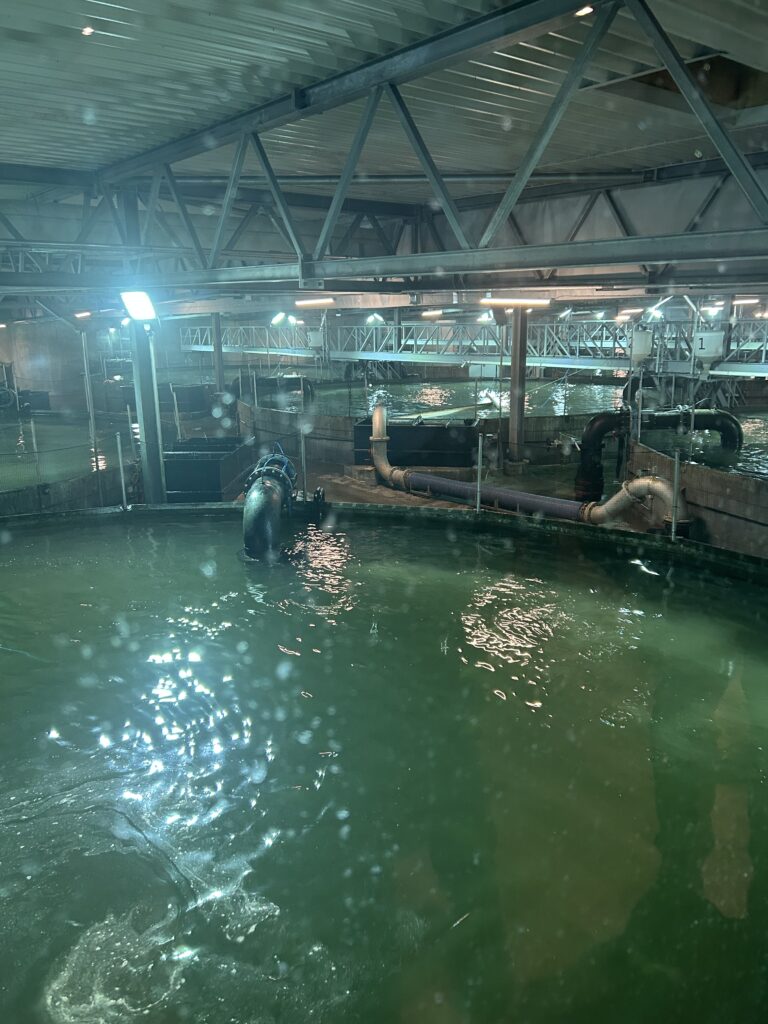
In RAS facilities, water from fish tanks is continuously treated and reused through a series of processes including mechanical filtration, biological filtration, degassing and oxygenation. Biofilters play a crucial role by converting ammonia produced by fish metabolism into less harmful compounds through microbial nitrification processes.
Recent technological improvements have focused on increasing system stability and energy efficiency while enabling higher stocking densities. Advanced drum filtration systems are now widely used to remove suspended solids at an early stage in the water treatment process, reducing organic loading in downstream biofilters. Improved moving-bed biofilter designs allow more efficient nitrification, while degassing units and oxygenation systems help maintain optimal dissolved gas conditions in intensive production systems.
Another area of innovation is the integration of advanced water treatment technologies such as ultraviolet (UV) disinfection and ozone treatment. These systems help control pathogens and improve water clarity, contributing to improved fish health and biosecurity.
Energy efficiency has also become an important design consideration. Modern RAS facilities increasingly incorporate heat recovery systems, energy-efficient pumps and improved hydraulic designs that reduce overall energy consumption. As energy prices and environmental concerns continue to rise, system optimisation in this area is becoming a key focus of both research and industry development.
The continued refinement of RAS technologies has enabled the expansion of land-based aquaculture production for species such as trout, salmon smolt and eel, while also supporting the development of new production concepts in several regions.
Processing technologies and circular resource utilisation
Alongside developments in production systems, the Danish aquaculture and seafood sectors have increasingly focused on improving resource efficiency and circular utilization of raw materials. This reflects a broader industry trend toward reducing waste and maximising value from marine resources.
Modern seafood processing technologies allow a significantly higher proportion of harvested fish to be utilised for food ingredients, feed ingredients or other value-added products. Advanced mechanical separation systems, enzymatic processing and improved handling technologies enable efficient recovery of proteins and oils from processing side streams.
Fish by-products that were historically considered waste are now commonly used in the production of fish meal, fish oil and other feed ingredients. These products play a crucial role in the aquaculture value chain, as they provide high-quality nutrients for feed formulations used in farmed fish production.
The increasing focus on circular resource utilisation also reflects growing attention to sustainability in global seafood markets. Improving raw material utilisation not only reduces environmental impact but can also improve economic efficiency within the industry.
In recent years, further research has explored opportunities to utilise processing side streams for novel ingredients, including protein hydrolysates and functional feed ingredients. Such developments illustrate the broader shift toward resource optimisation across the seafood and aquaculture sectors.
Digitalisation and operational optimisation
Digital technologies are increasingly playing an important role in modern aquaculture operations. Over the past several years, the integration of sensors, automation systems and data analytics has significantly improved the ability of producers to monitor and optimise production environments.
Water quality monitoring has traditionally relied on manual sampling and laboratory analysis. Today, modern aquaculture facilities increasingly employ real-time sensor technologies capable of continuously measuring parameters such as oxygen concentration, temperature, pH, ammonia and carbon dioxide levels. Continuous monitoring enables faster response to changes in water conditions, reducing stress on fish and improving overall system stability.
Automated feeding systems have also become more sophisticated. These systems can adjust feeding rates based on environmental conditions, fish behaviour or biomass estimates, helping to improve feed conversion ratios and reduce feed waste. Since feed represents one of the largest operational costs in aquaculture production, optimising feeding strategies is a major driver of technological development.
Digital monitoring technologies are also increasingly applied to fish welfare and behaviour. Underwater cameras and imaging systems allow operators to observe fish activity and detect changes that may indicate stress or disease. Advances in computer vision and machine learning are enabling automated analysis of fish behaviour, providing additional tools for health monitoring and management.
Data integration platforms are another emerging area of development. By collecting and analysing data from multiple sensors and systems within a facility, operators can gain a more comprehensive overview of production performance. Such systems support improved decision-making and can help identify opportunities for further operational optimisation.
Regulatory and environmental framework
The development of advanced aquaculture technologies in Denmark is closely linked to the country’s regulatory and environmental framework. Danish aquaculture operates under strict environmental requirements aimed at protecting surrounding ecosystems and reducing nutrient discharge to rivers and coastal waters.
These regulations have historically limited the expansion of traditional open-flow fish farms. At the same time, they have encouraged innovation in production technologies capable of reducing environmental impact. Recirculating systems, water purification technologies and improved waste management solutions have therefore become central elements in the sector’s technological development.
Research institutions and universities have played an important role in supporting this transition by developing methods to reduce nutrient emissions, improve resource utilisation and optimise system design.
The broader European regulatory landscape also influences the sector. Environmental directives such as the EU Water Framework Directive and marine environmental policies require member states to maintain good ecological status in aquatic ecosystems. These policies reinforce the importance of technologies that reduce water consumption, improve nutrient management and limit environmental impact.
While the regulatory framework presents certain challenges for production growth within Denmark itself, it has also contributed to the development of specialised expertise in sustainable aquaculture technologies. As a result, Danish technology providers and engineering companies play an important role in supplying equipment and knowledge to aquaculture projects around the world.
A technology-driven aquaculture sector
Although Denmark’s aquaculture production volume is relatively small compared with leading global producers, the country has established itself as an important centre for aquaculture technology and innovation. Continuous investment in research, engineering and environmental solutions has enabled the development of advanced production systems with a strong focus on sustainability and resource efficiency.
Technological developments in recirculating aquaculture systems, water treatment, digital monitoring and resource utilisation continue to shape the sector. At the same time, strict environmental regulations and strong research collaboration have helped drive innovation in production technologies.
As global demand for seafood continues to increase and environmental pressures on aquatic ecosystems intensify, the need for efficient and sustainable aquaculture systems will become even more important. In this context, the technologies developed within the Danish aquaculture sector are likely to play a growing role in supporting the future expansion of sustainable fish production worldwide.