

































Vietnam seafood exports are on course for a record year, with firm farm prices and year-end festive demand expected to help the sector reach its US$12 billion target for 2026.

Overseas sales earned more than US$10.4 billion in the first 10 months of 2026, up nearly 12 percent on the same period of 2025, according to the Ministry of Agriculture and Environment. October alone brought in an estimated US$1.34 billion, so exporters need roughly US$800 million a month in November and December 2026 to hit the goal. The previous high was US$11.3 billion in 2025, said Nguyen Hoai Nam, Secretary General of the Vietnam Association of Seafood Exporters and Producers (VASEP).
Farm output leads growth
Aquaculture is the main engine behind the rise. Output reached nearly 5.52 million tonnes in the first 10 months, up 6 percent, including more than 655,000 tonnes in October, the ministry said. Total seafood production for the first nine months stood at 7.89 million tonnes, up 3.9 percent and equal to 78.1 percent of the annual target. That volume comprised 5.41 million tonnes of fish, almost 1.38 million tonnes of shrimp and 1.1 million tonnes of other aquatic products, with farmed volumes making up 4.86 million tonnes.
In the Mekong Delta, many brackish-water shrimp areas have entered their main harvest season. Rice-shrimp and mangrove-shrimp systems are delivering positive results, while intensive and super-intensive zones using high technology are expanding. Pangasius output remained stable, and tilapia and marine farming are gaining ground, widening the supply base.
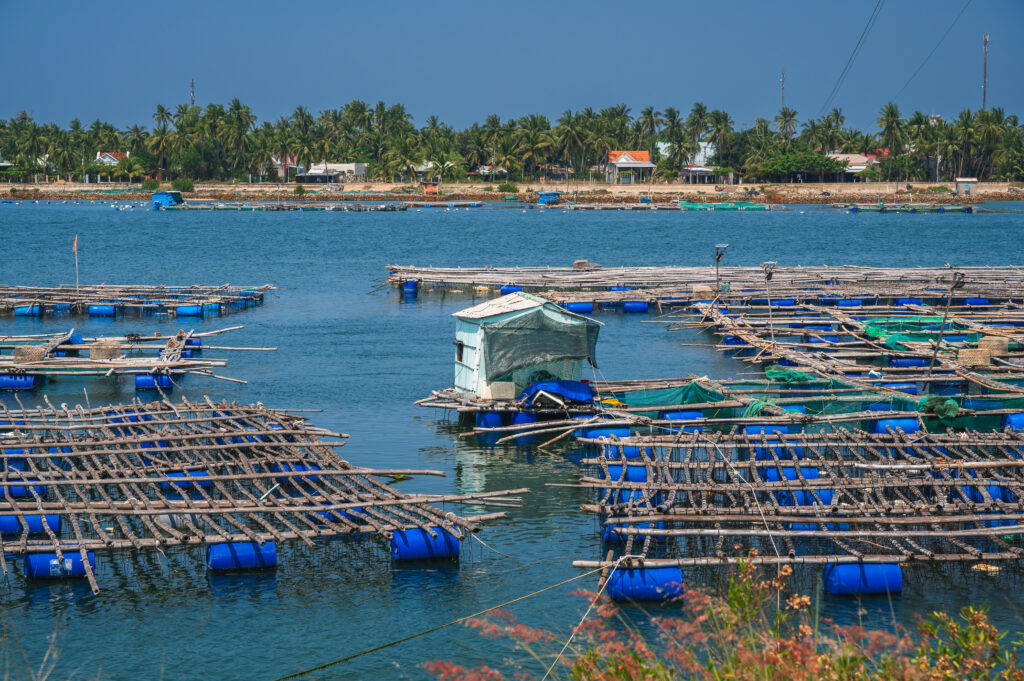
Prices are helping farm margins. In Ca Mau Province, whiteleg shrimp of 20 per kilogram, raised in lined ponds, sold for VND 175,000-180,000 (about US$6.80-7.00) per kilogram in the first half of October 2026, up from September. Raw pangasius held at VND 32,000-34,000 per kilogram as export-grade fish remained scarce. The ministry expects large whiteleg shrimp to stay high or edge up through year-end, and pangasius to stay above VND 30,000 per kilogram in November.
Shrimp momentum slows
Shrimp is the largest product group, with exports of about US$3.7 billion in the first nine months of 2026, up 11 percent. That is roughly 41 percent of the sector’s export earnings. Growth has since cooled. VASEP reports shrimp exports above US$4.2 billion after 10 months, but says the pace keeps slowing. October shipments fell almost 5 percent to nearly US$474 million. Whiteleg shrimp, the main farmed species, dropped more than 8 percent to nearly US$307 million, and its 10-month total of US$2.6 billion was up just 4 percent.
VASEP market expert Phung Thi Kim Thu said demand from China and members of the Comprehensive and Progressive Agreement for Trans-Pacific Partnership (CPTPP) kept sales rising. Shipments to the US began to fall in September 2026, she added, while tariffs, competition and raw material shortages weigh on companies. Under a US trade decision issued on 23 July 2026, Vietnamese seafood faces a 12.5 percent Section 301 tariff, against 10 percent for rivals such as India, Ecuador and Indonesia.
Processors still see room in the US for deeply processed, higher-value products. Le Van Quang, General Director of Minh Phu Seafood Corporation, said the gap with India and Ecuador is not yet wide enough to hurt such products, and that the US is now the company’s largest market. Minh Phu has booked record orders beyond its production capacity, he said, and the company is automating 70-80 percent of its operations. Even with all three factories at full capacity, orders cannot be fully met, and a fourth plant could follow if the market keeps growing.
Pangasius gains and year-end plans
Pangasius is helping to fill the gap. Exports reached about US$1.7 billion in the first nine months, up 11 percent, and October shipments exceeded US$249 million, rising nearly 15 percent. VASEP Deputy Secretary General Le Hang said tighter stocks of some wild-caught whitefish species are opening opportunities for Vietnamese fish.

In Japan, pangasius is now entering professional distribution channels, although the market is still small, and competitive pricing and steady supply are drawing buyers.
China is the standout market, with shipments up more than 34 percent in the 10 months, against rises of just 0.5 percent in the US and 1.5 percent in Japan.
Tran Gia Long, Deputy Director of the ministry’s Department of Planning and Finance, said seafood must keep leading if agriculture, forestry and fishery exports are to reach their US$74 billion target for 2026, with shrimp expected to play a central role. He called for a more stable raw material base, wider use of technology, tighter disease control and production planned around market demand. Closer links between farmers, fishermen and processors would improve purchasing plans and help firms fill orders, he added, while businesses should stay flexible on products and markets and keep costs under control.